A new authenticated video published by Iran's Mehr news agency, confirmed by BBC Verify, shows a US Tomahawk cruise missile striking an IRGC base approximately 200 meters from the Shajareh Tayebeh primary school in Minab, southern Iran — where Iranian authorities say 168 people died, including around 110 children. Three independent military analysts identified the weapon: the Tomahawk is a long-range US cruise missile neither Israel nor Iran possesses. An analyst at McKenzie Intelligence Services said the missile has 'all the hallmarks of a US Tomahawk in its terminal phase.' Evidence of multiple simultaneous strikes on the entire IRGC compound 'is indicative of a deliberate and precise' US operation, according to a former US Air Force national security analyst. The intended target appears to have been an IRGC medical clinic inside the compound; the school is roughly 650 feet away. A preliminary internal US assessment, obtained by CBS News, found the US was 'likely' responsible and may have hit the school in error. Trump has publicly blamed Iran, citing Iranian missile inaccuracy. The BBC has asked the US government to respond to the expert assessment of the new video.
The US-Israeli campaign, dubbed Operation Epic Fury, began February 28 with strikes across Iran that killed Supreme Leader Ali Khamenei. Among the targets was the Minab area in southern Iran, near the Persian Gulf coast — confirmed in a Pentagon strike map released March 4. The school bombing was first reported by Iranian media around March 2-3; an ongoing Iranian internet blackout complicated early verification. The new video, first analyzed by the open-source investigation group Bellingcat, emerged March 9. Iran has blamed the US and Israel; neither country has publicly accepted responsibility.
In a day of contradictory statements on the war's tenth day, President Trump told reporters on Monday that the conflict with Iran is 'very complete, pretty much' and an 'excursion' that would end 'very soon' — before reversing himself hours later to promise the US would 'go further.' Oil prices hit $120 per barrel earlier in the day; Trump's conciliatory comments drove them back below $90, but the relief was short-lived. By evening, Trump warned Iran that if it threatened oil tankers in the Persian Gulf, 'We will hit them so hard that it will not be possible for them or anybody else helping them to recover that section of the world.' Defense Secretary Pete Hegseth separately told CBS that the military hasn't 'even really begun' using heavy conventional munitions — 500-pound, 1,000-pound, and 2,000-pound bombs. A group of Senate Democrats announced they would block floor business until Rubio, Hegseth, and other senior officials testify under oath on the war. US gas prices have reached $3.48 per gallon — up 48 cents from a week ago — and unemployment ticked up to 4.4% after the economy lost 92,000 jobs in February.
Trump had previously demanded Iran's 'unconditional surrender' before any deal. The Strait of Hormuz — a narrow passage through which about 20% of global oil supply flows — has been effectively closed to commercial shipping since the war began, driving oil to multi-year highs. Iran's new Supreme Leader, Mojtaba Khamenei, was appointed by the Assembly of Experts on March 9 following his father's death in the opening strikes. The political cost of the war is mounting: a Quinnipiac poll found nearly three-quarters of Americans oppose sending US ground troops into Iran.
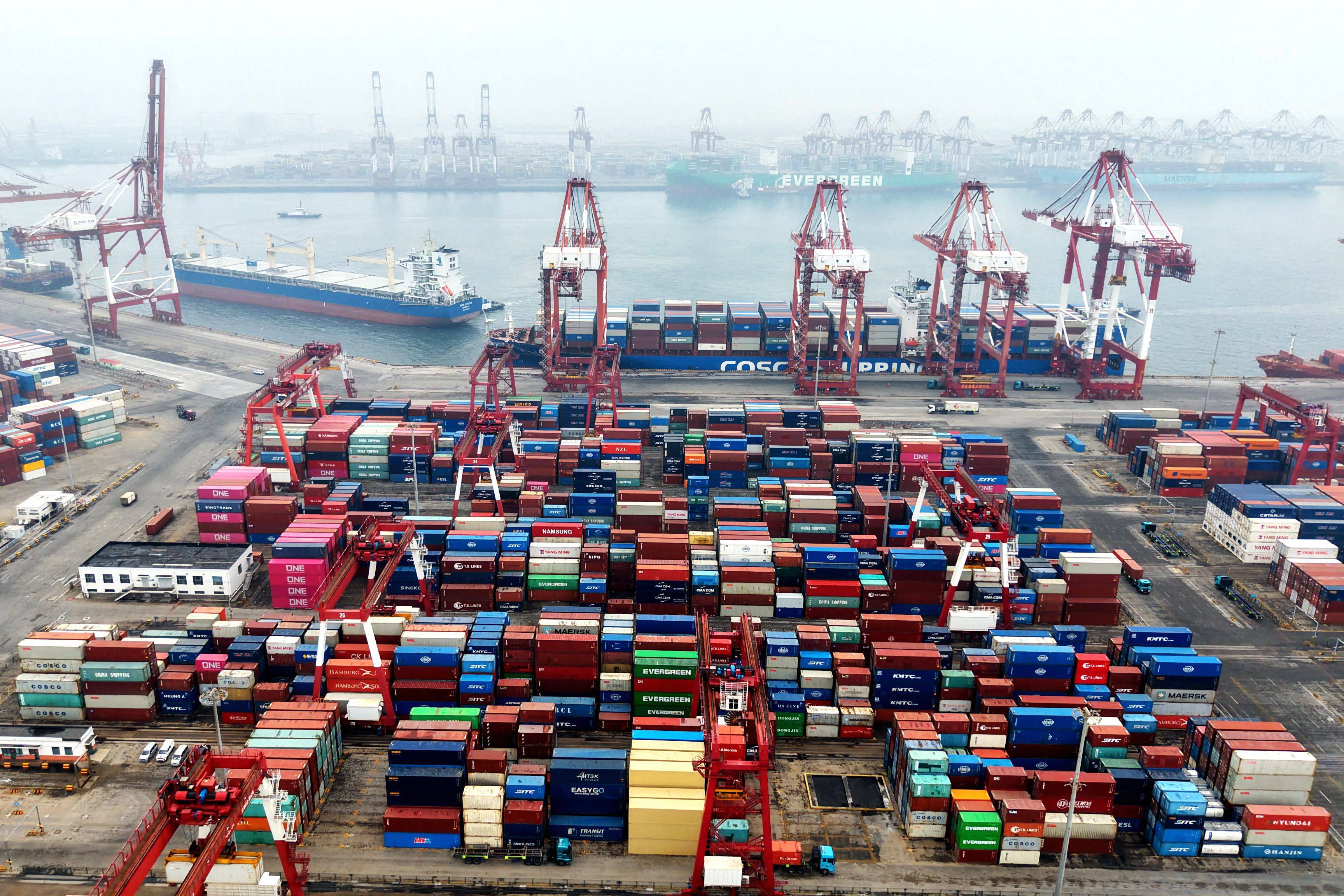
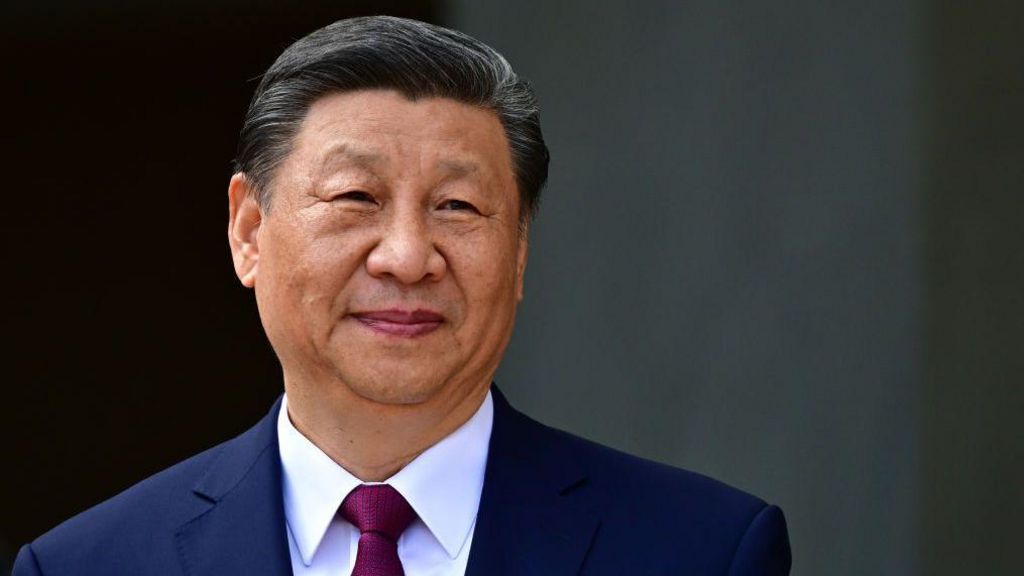
China's exports jumped 21.8% in January and February 2026 compared to a year earlier — the biggest gain in four years — reaching $656.58 billion combined, customs authorities reported Tuesday. The surge nearly tripled economists' predictions and sharply accelerated from the 6.6% growth recorded in December. Trade with European countries grew 27.8%; exports to ASEAN nations climbed nearly 30%. But exports to the US fell more than 10%, as Trump's tariffs have redirected some Chinese goods toward other markets. Economists attribute the boom mainly to surging global demand for electronics and tech products, driven by the AI investment wave. China typically combines January-February trade data to smooth distortions from the Chinese New Year holiday. The announcement comes as Trump is expected to visit China in early April to meet Xi Jinping.
China's economy has been navigating a prolonged property market slump, weak domestic consumption, and a shrinking working-age population. Export growth has been the primary engine keeping GDP on track toward the government's 4.5–5% target set at this year's National People's Congress. China recorded a record trade surplus in 2025 of over $1 trillion. The strong January-February data will likely complicate trade talks with the US ahead of Trump's Beijing visit.
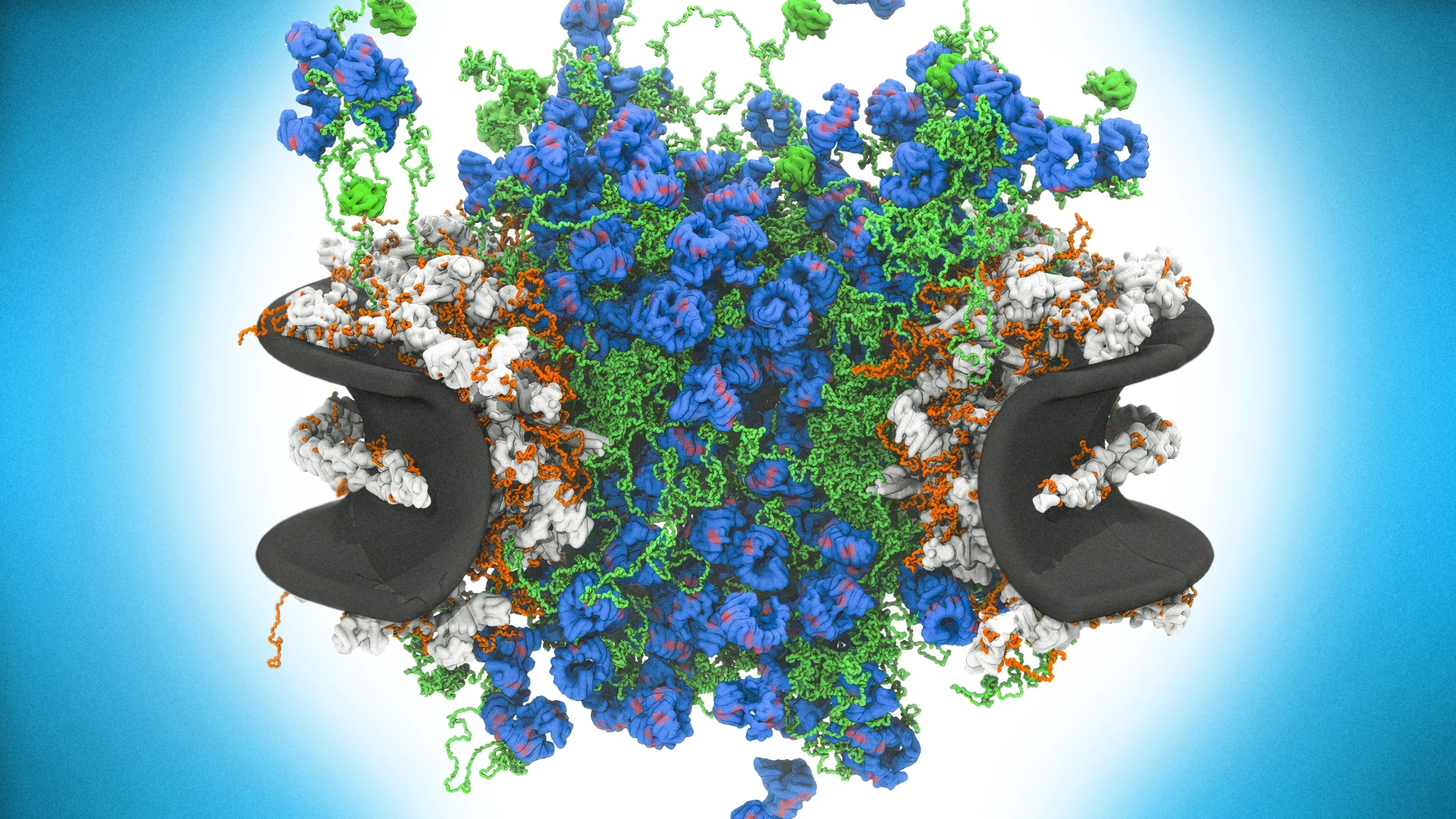
Every second, each of the thousands of nuclear pore complexes in your cells lets hundreds to thousands of molecules pass into or out of the cell nucleus — RNA going out to make proteins, regulatory proteins going in, harmful enzymes being blocked. For decades, scientists could image the rigid outer scaffold of these pores, but the central 'gatekeeper' channel — filled with spaghetti-like disordered proteins — constantly rearranges itself, making it nearly impossible to study. A study published in Nature Cell Biology in late 2025 by researchers at Rockefeller University captured the pores in action at millisecond resolution for the first time, backed by computational models. The counterintuitive result: the pores work precisely because of their disorder, not despite it. Constant protein reshuffling is what allows the complex to selectively pass large and small molecules alike, and at extraordinary speed. The research could help explain how pore dysfunction leads to neurodevelopmental disorders, viral disease, and cancers — and may eventually guide efforts to deliver therapeutic molecules into the cell nucleus.
Nuclear pore complexes are assembled from roughly 500 proteins of about 30 different types. They evolved once, extremely early in the history of complex life, and are nearly identical across species from yeast to humans. The outer ring of the complex can be imaged with standard high-resolution microscopy; the problem has always been the central region, packed with 'intrinsically disordered' proteins that do not hold a fixed shape. Rockefeller's Mike Rout, who led the new study, has worked on nuclear pores for decades. Dysfunction in pore proteins has been identified as a factor in certain cancers and in ALS.
The California State University system, which enrolls more than 460,000 students across 23 campuses, filed a federal lawsuit against the Trump administration — a rare step for a major public university system. The lawsuit stems from a federal demand that San Jose State University formally apologize to female athletes for having allowed a transgender volleyball player to compete. Cal State declined, arguing the demand amounted to government-compelled speech in violation of the First Amendment. The move marks the first known instance of a major public university system suing the Trump administration over a compelled-speech demand tied to transgender athlete policy.
San Jose State's volleyball program became a flashpoint in the broader debate over transgender athletes in women's sports. The Trump administration has taken an aggressive posture toward universities that do not comply with its executive orders on gender in sports, including threatening to revoke federal funding and demanding public repudiations. Cal State, as the nation's largest four-year university system by enrollment, could face major financial consequences if federal funding is at risk — which makes the decision to sue rather than comply notable.
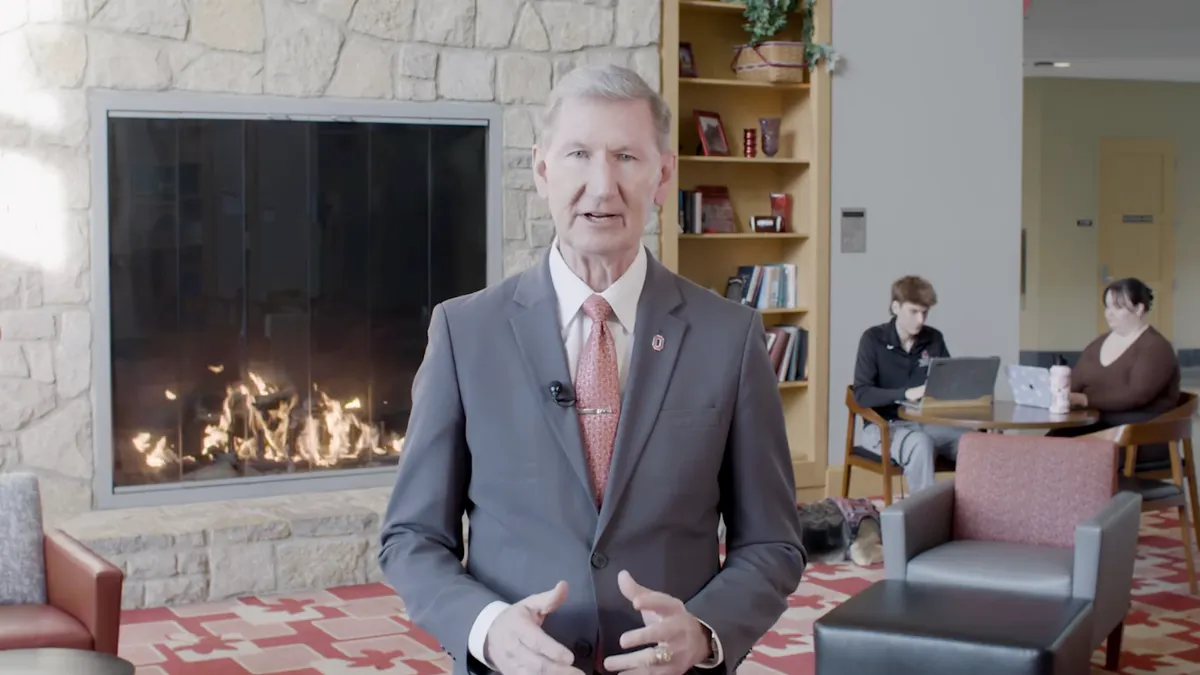
Ohio State University President Ted Carter abruptly resigned Saturday after telling the Board of Trustees he had allowed 'inappropriate access to Ohio State leadership' to someone outside the university who was seeking support for her personal business. The disclosure came after a third party reported concerns to the board, which convened an unplanned private meeting to consult with legal counsel before accepting Carter's resignation the following day. Ohio State released no specifics about the relationship or the nature of access provided, but the university said it would release details about the presidential transition in coming days. Carter, a retired Navy admiral, had taken the job in January 2024 after his predecessor Kristina Johnson also left mid-contract at the board's request. During Carter's short tenure, Ohio State reached more than $60 million in settlements with survivors of sexual abuse by a former university physician, eliminated its DEI offices, and faced mounting faculty pressure over ties to Jeffrey Epstein donor Leslie Wexner.
Ohio State is one of the largest research universities in the US, with a $10+ billion annual budget and over 60,000 students. The university's medical center, arts center, and football practice facility are all named after billionaire donor Leslie Wexner, whose relationship to convicted sex offender Jeffrey Epstein has drawn intense congressional scrutiny. Wexner was deposed by the House Oversight Committee in February. The abrupt exit follows a broader national pattern of presidential instability at flagship research universities.
Indiana Governor Mike Braun signed a bill into law Thursday that requires public universities and Ivy Tech Community College to close any academic program whose graduates fail a new federal earnings test. The test — embedded in the One Big Beautiful Bill Act passed by Congress last year — flags undergraduate programs whose graduates on average earn less than high school diploma holders (roughly $35,000 in Indiana). Graduate programs face a stricter bar: they must show graduates out-earning bachelor's degree holders. Failing programs must close unless the state Commission for Higher Education grants an exemption. Critics say the rule disproportionately targets humanities, arts, education, and social work programs — fields with lower starting salaries but strong longer-term earnings and societal value. Indiana is one of the first states to encode this test into law and make closure the automatic penalty.
The federal Do No Harm test was introduced as part of the broader overhaul of higher education law and has not yet fully taken effect nationally. Indiana's move preempts and sharpens the federal rule by embedding it in state statute. Ivy Tech is Indiana's statewide community college system. A parallel debate is playing out in other states, as legislators weigh using earnings data to steer students away from low-ROI programs while critics warn the approach reduces education to workforce training.
Researchers have recovered a missing page from the Archimedes Palimpsest — one of the most important surviving scientific manuscripts from antiquity — after locating it at the Museum of Fine Arts in Blois, France. The page, labeled 123, has been missing since at least 1906, when a historian photographed most of the manuscript but found some pages already gone. One side contains legible text from Archimedes' treatise On the Sphere and the Cylinder, which laid early foundations for integral calculus. The other side is covered by a gilded medieval illustration of the prophet Daniel, hiding whatever mathematical text lies beneath; researchers plan to use X-rays and advanced imaging to recover it. The find was announced by the French National Center for Scientific Research.
Archimedes of Syracuse (around 287-212 BCE) is one of antiquity's greatest mathematicians, with contributions to geometry, hydrostatics, and the foundations of calculus. The Archimedes Palimpsest is a 10th-century Byzantine manuscript that was written over by medieval monks — the original Archimedean text was scraped off and parchment reused. Scholars discovered it in the 19th century and decoded it using modern multispectral imaging; the main manuscript is housed at the Walters Art Museum in Baltimore. A palimpsest is a reused writing surface where older writing has been incompletely erased and remains partially recoverable.
China's national legislature is set to formally pass a law this week that encodes and expands decades of policies targeting ethnic minority communities. The legislation — titled 'Law for Promoting Ethnic Unity and Progress' — lowers the status of minority languages in favor of Mandarin, encourages Han-minority intermarriage while banning attempts to restrict it, requires parents to 'educate and guide minors to love the Communist Party,' and broadly prohibits acts deemed harmful to 'ethnic unity.' Rights advocates and academics say the law accelerates cultural assimilation policies that critics have called erasure, particularly affecting Uyghur communities in Xinjiang and Tibetans. The law passes the National People's Congress in the same session where China set its 2026 growth target and announced its 15th Five-Year Plan. Xi Jinping has repeatedly called for the 'Sinicisation of religion,' and the law is widely seen as a statutory entrenchment of his core domestic agenda.
China officially recognizes 55 ethnic minorities alongside the dominant Han population. International human rights groups and a 2022 UN report allege that over one million Uyghur Muslims have been detained in 're-education' camps in Xinjiang — camps the Chinese government calls vocational training centers. Previous minority policies — including mandatory Mandarin-only schooling for children, banning children under 18 from religious instruction, and mosque demolitions — were implemented by directive; the new law elevates this framework to the level of national statute. Tibet faces parallel restrictions on monastic life and Tibetan Buddhist education.
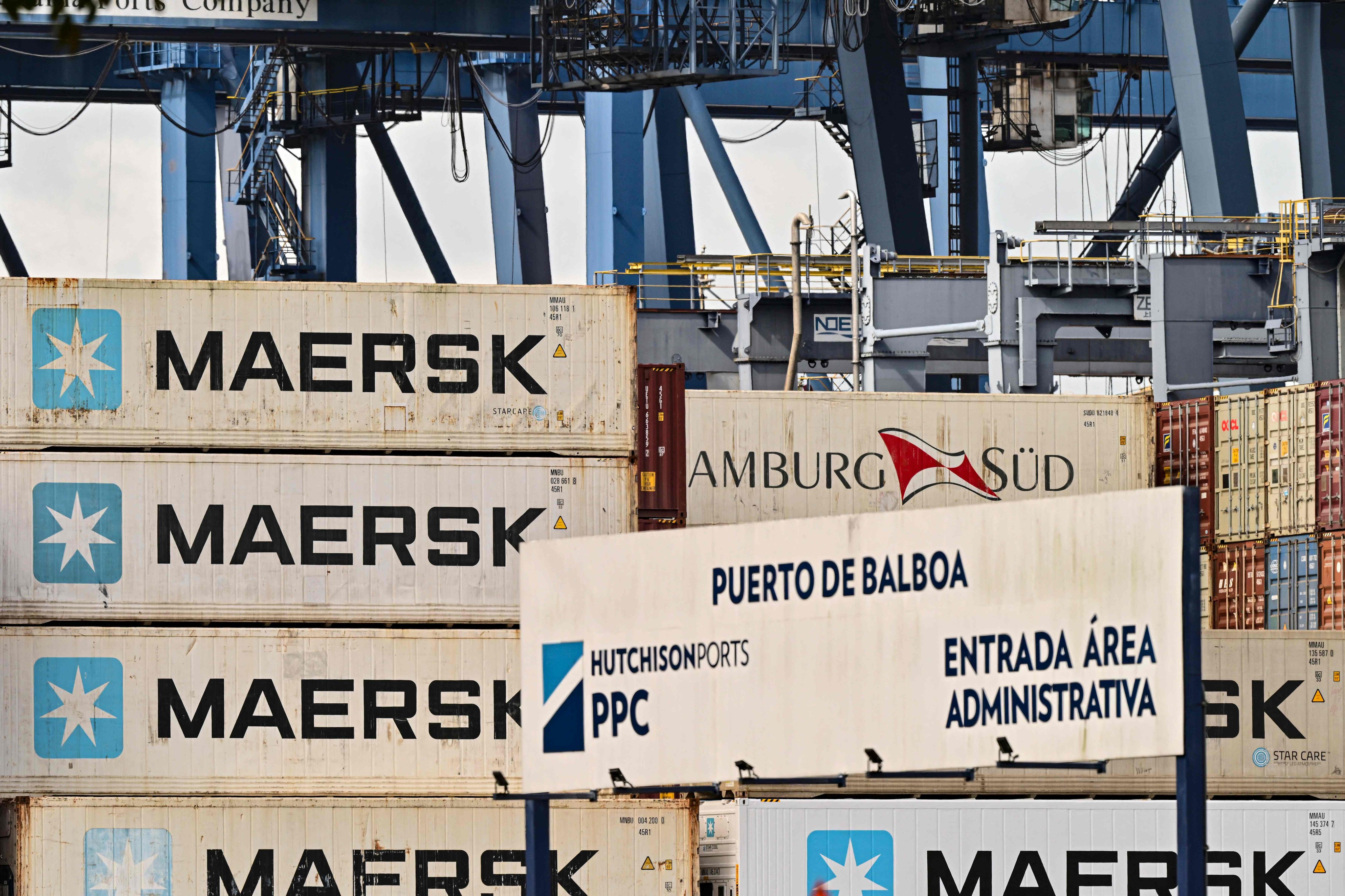
China's Ministry of Transport has summoned the world's two largest shipping companies — Maersk and Mediterranean Shipping Company (MSC) — for talks on 'international shipping operations,' amid simultaneous geopolitical disruptions to global trade routes. The one-sentence official statement provided no further detail, but government summons in China typically serve as a formal warning. The timing ties two separate crises together: the Iran war has effectively closed the Strait of Hormuz, rerouting tankers and container ships; and in Panama, courts voided CK Hutchison's decades-old concession for two strategically important canal ports — control of which temporarily passed to Maersk's APM Terminals and MSC's Terminal Investment. CK Hutchison, the Hong Kong-based conglomerate, has filed for international arbitration and filed legal proceedings against Panama, seeking at least $2 billion in damages.
CK Hutchison, controlled by the Li Ka-shing family in Hong Kong, has operated two key Panama Canal ports since the 1990s under a long-term concession. In late February 2026, a Panamanian court ruled the concession unconstitutional, and authorities handed temporary control of the Balboa and Cristobal ports — on opposite ends of the Canal — to Maersk and MSC respectively. The move was welcomed by the US government, which had long been suspicious of Chinese-linked companies operating near the strategically critical waterway. Beijing responded by calling the seizure illegal and promising to defend its enterprises' interests.
Jay Graber, who built Bluesky from a Twitter research project into a platform with 40 million users, is stepping down as CEO. Toni Schneider — a venture capitalist, former CEO of Automattic (the company behind WordPress.com), and early Bluesky advisor and investor — will serve as interim CEO while a permanent replacement is searched for. Graber is becoming the platform's Chief Innovation Officer, focused on building new features. Schneider described himself as a 'late convert' to decentralized social media who became a believer after meeting Graber and COO Rose Wang, and pledged to 'double down' on open, user-controlled infrastructure. The transition comes at a moment when Bluesky has plateaued at 40 million users — up from 30 million a year ago — after a wave of Twitter/X departures failed to generate continued growth.
Bluesky was incubated at Twitter by co-founder Jack Dorsey as a research initiative into decentralized social media before spinning out as an independent company in 2021. Its core technology is the AT Protocol, which allows users to own their identity and social graph and move it between compatible platforms. After Elon Musk's 2022 acquisition of Twitter/X, Bluesky attracted large numbers of journalists, academics, and civil society figures, becoming the primary alternative for media industry users. Automattic, Schneider's former employer, is the company behind WordPress.com and the open-source WordPress platform.
Grammarly launched an AI editing feature last August called 'Expert Review' that generates writing feedback supposedly from named human experts — including authors Stephen King and Carl Sagan, scientist Neil deGrasse Tyson, and dozens of prominent tech journalists. The reviews are AI-generated, not written by the people named. None of the named individuals consented or were compensated; several, including Platformer's Casey Newton and former Verge editors, discovered their names only when colleagues noticed. A disclaimer buried in Grammarly's support documentation states that named experts are listed 'for informational purposes only' and do not indicate any affiliation or endorsement. Grammarly — which has 40 million daily users and an annual subscription cost of $144 — told Platformer it will allow experts to opt out. The company resells AI tokens from OpenAI and other providers, meaning users are paying a markup for AI assistance they could access directly.
The feature raises two distinct legal and ethical concerns. First, the unauthorized commercial use of real people's names and professional identities to market an AI product — a form of false endorsement. Second, the question of whether describing AI-generated text as coming 'from' a named expert crosses into deceptive advertising under FTC guidelines. The use of Carl Sagan's name is especially notable, as he died in 1996 — making his attributed 'advice' entirely AI-fabricated and not even theoretically consented to by a living person.
A new study from MIT and the Woods Hole Oceanographic Institution, published this week in PNAS, finds that bacteria hitching rides on sinking 'marine snow' particles may be significantly reducing the ocean's ability to lock away carbon from the atmosphere. As marine snow — the dead and decaying material that continuously drifts down from the ocean surface — sinks, it carries calcium carbonate as ballast, which is what keeps the particles heavy enough to descend. The team found that bacteria feasting on the particles can eat away at that calcium carbonate within shallow water, where chemistry was assumed to preserve it. Without the ballast, particles stall and are consumed in the upper ocean, releasing carbon dioxide back toward the atmosphere instead of locking it in the seafloor. The finding resolves a long-standing puzzle: dissolved calcium carbonate has been found in shallow ocean layers for years with no explanation. If bacteria routinely erode the ballast, the ocean's carbon pump may be considerably weaker than scientists currently estimate.
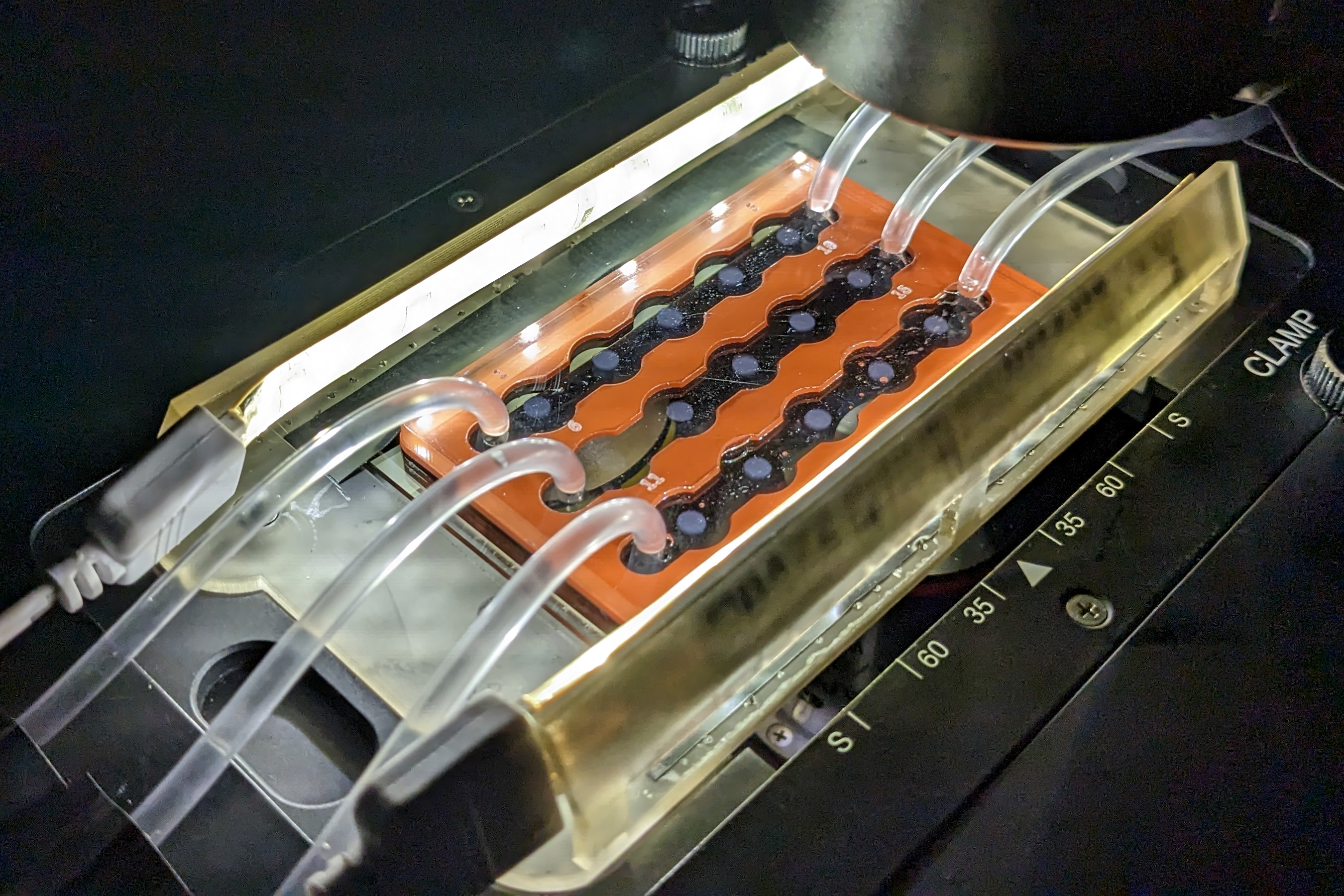
Marine snow is the ocean's main 'biological pump' — the mechanism by which surface phytoplankton absorb atmospheric CO2 and, when they die, carry that carbon down into the deep ocean where it can be buried for centuries. Scientists estimate this process draws down billions of tons of carbon per year. Calcium carbonate — the same mineral found in seashells and coral — acts as ballast that helps particles sink past 1,000 meters, the depth below which carbon tends to stay locked away. The MIT team simulated individual sinking particles using small microfluidic chips, reproducing the microscale bacterial interactions that macroscale ocean models had missed.
A federal trial opened this month in Miami that places Trump's Secretary of State Marco Rubio at the center of a foreign influence scandal. At the center is David Rivera, the Cuban-American Republican congressman who was Rubio's closest political ally for two decades — they rose together through the Florida legislature, shared a Tallahassee bachelor pad as young lawmakers, and Rivera helped recruit Rubio into his Senate campaign. Rivera is now on trial for allegedly running an unregistered lobbying operation worth at least $50 million on behalf of the Venezuelan government under Nicolás Maduro — a government officially sanctioned by the United States. Chief of Staff Susie Wiles is also named as connected to the lobbying network. Rivera is accused of concealing the source of the payments under the Foreign Agents Registration Act, which requires public disclosure when lobbying on behalf of foreign governments.
FARA (the Foreign Agents Registration Act) requires people who lobby or advocate in the US on behalf of foreign governments to register publicly and disclose their activities. The Maduro government in Venezuela has been under comprehensive US sanctions since 2019 for human rights abuses, electoral fraud, and ties to drug trafficking. Lobbying on behalf of a sanctioned government without registration is a federal crime. Rivera served in Congress from 2011-2013 before losing his seat, and has since worked in consulting. The trial comes as Rubio, now Secretary of State, oversees US policy toward Venezuela.
DARPA has officially unveiled the X-76, a new experimental aircraft being built by Bell Textron that aims to break one of military aviation's oldest constraints: you can have either the speed of a fixed-wing jet or the go-anywhere flexibility of a helicopter, but not both. The X-76, announced following a successful Critical Design Review, targets cruise speeds above 400 knots — roughly three times faster than most military helicopters — while retaining the ability to hover and operate from unprepared surfaces without a runway. The program, called SPRINT, is a joint DARPA and US Special Operations Command effort. The current phase focuses on manufacturing and ground testing; flight tests are planned for early 2028. The X-76 designation deliberately nods to 1776 and the 250th anniversary of the US.
The X-plane program is a decades-long series of experimental aircraft used to test the boundaries of aviation technology, beginning with the X-1 that broke the sound barrier in 1947. Current military trade-offs force planners to choose: fast fixed-wing aircraft need vulnerable runways, while helicopters offer flexibility but are slow and shorter-ranged. That gap has long limited special operations flexibility. SPRINT's Phase 1 resulted in a competitive downselect to Bell Textron, the maker of iconic military helicopters including the V-22 Osprey. The tiltrotor V-22 was itself an attempt to bridge this gap, though with significant engineering and safety challenges.