President Trump is urging Britain, France, Japan, South Korea, China, and other maritime powers to send warships to help secure the Strait of Hormuz, the narrow waterway now sitting at the center of the Iran war's economic fallout. The immediate problem is not just battlefield escalation but commercial paralysis: tankers have slowed, insurance costs have jumped, and governments are openly discussing how to keep one of the world's most important oil routes functioning without letting a naval escort operation slide into a broader regional clash. About one-fifth of global oil supply normally moves through the strait, with Asia especially exposed, so this is the point where a Middle East war stops being only a security story and becomes an inflation and supply-chain story too. The awkward part for Washington is that Trump's appeal produced attention but no instant commitments, showing how reluctant allies remain to turn energy protection into a visible military coalition.
The strait links the Persian Gulf to the Arabian Sea and has become the key chokepoint of the Iran war. Iran has threatened shipping there before, but the current fighting has made even temporary disruption a global energy-market problem.
A protest at a local Communist Party office in central Cuba ended with five arrests, but the larger signal is that anger over blackouts and shortages is becoming harder for the government to contain with routine explanations. Cuba has been dealing with repeated grid failures, fuel shortages, and shortages of food and medicine, and the latest round of unrest followed yet another power breakdown tied to problems at an aging thermoelectric plant. Students have already staged sit-ins in Havana; now the pressure is spreading beyond campus frustration into more directly anti-government action. That matters because Cuban protests are not just about inconvenience. When outages stretch for many hours and daily life starts failing in multiple ways at once, blackouts become a referendum on state capacity. President Miguel Diaz-Canel is reportedly in talks with Washington, but those diplomatic openings do not solve the island's immediate problem: people increasingly believe the system cannot keep the lights on.
Cuba's grid has been deteriorating for years, but the crisis worsened after fuel supplies tightened and key plants kept failing. Blackouts have already disrupted universities, transport, and basic household life across much of the island.
Moonshot AI is reportedly trying to raise up to $1 billion at a valuation of about $18 billion, a huge jump that shows how quickly investors are repricing China's top foundation-model companies. The company is best known for Kimi, a long-context chatbot that helped make Moonshot one of the few Chinese labs seen as a plausible peer to the country's largest model builders rather than just another application layer. The size of the round matters less as a vanity number than as a signal about where capital is concentrating. Training frontier models now demands massive spending on chips, data, and talent, so investors are increasingly treating the sector like a race in which only a few labs will be able to stay near the front. For readers outside China, the useful takeaway is that the Chinese AI contest is no longer a vague national ambition; it is becoming a high-stakes capital market in which a small number of firms are being funded as strategic infrastructure.
China's model race has intensified as labs compete under tighter US chip controls and a crowded domestic market. That favors companies that can still attract fresh funding at scale while proving they have a real product, not just a research demo.
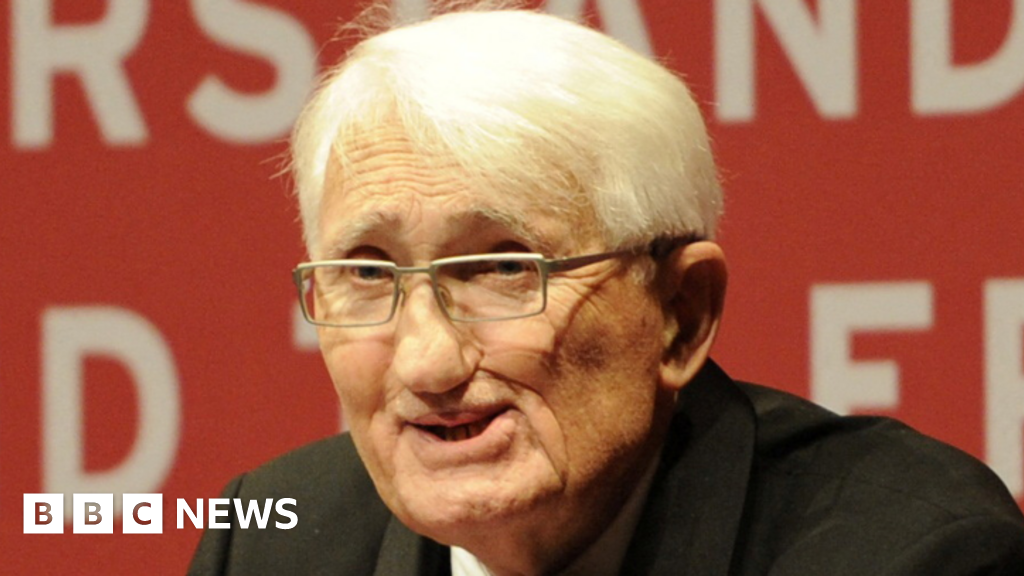
Jürgen Habermas, one of the central thinkers of postwar Germany, has died at 96. His work on the public sphere, communicative reason, and democratic legitimacy mattered far beyond academic philosophy because it offered a serious answer to a practical political question: how can modern societies still govern themselves through argument rather than force, propaganda, or technocratic management? Habermas wrote across philosophy, sociology, law, and political theory, with The Theory of Communicative Action becoming his best-known major work. He also remained a public intellectual in the old European sense, intervening in disputes about German memory, European integration, and the moral legacy of Nazism. That combination is why his death feels larger than an obituary for one professor. He represented a style of intellectual life in which abstract theory was supposed to clarify civic life, not retreat from it. Even critics who found him dense or optimistic had to argue with him on terms he helped set.
Born in 1929, Habermas grew up under Nazism and later made Germany's reckoning with that past a core part of his political thinking. He was also a major figure in the 1980s Historians' Dispute over how Nazi crimes should be understood in German public life.
The Iran war has turned prediction markets into an uglier political issue than election betting ever was. Platforms such as Kalshi and Polymarket have handled huge volumes on questions tied to strikes, regime change, and military escalation, provoking a backlash from lawmakers and critics who argue that the products look less like clever forecasting tools and more like liquid markets for violence. That matters because the industry's entire pitch has been that betting markets produce useful information. Once the contracts are about assassinations, war timing, or battlefield outcomes, the social case gets much weaker and the insider-trading risks get much more disturbing. Kalshi has tried to distinguish itself from offshore rivals with a death carveout policy, but that has not stopped the broader reputational damage. The real issue now is not whether prediction markets can attract attention. It is whether they can keep their claim to public legitimacy once people start seeing them as a place to monetize geopolitical catastrophe.
Prediction markets have been expanding rapidly in the US through a mix of federal regulatory arguments and state-level legal fights. War contracts added a new problem: they blur the line between probabilistic forecasting, gambling, and possible profiteering from advance knowledge of violent events.
China has approved its first brain-computer implant for commercial use, giving Neuracle Medical Technology permission to market an invasive device for some patients with partial spinal-cord injuries. The approval is notable not because it means brain implants are suddenly becoming routine, but because it moves the technology one step out of the lab and into an actual medical-regulatory channel. These systems work by placing electrodes on or in the brain to capture neural signals that can then help control external devices or support rehabilitation. That still leaves hard problems around surgery, training, reliability, and who will benefit enough to justify the procedure. But commercial approval changes the conversation from "can this be demonstrated" to "under what conditions should this be used?" China is pushing hard on neurotechnology, and this looks like an attempt to build an early lead in a field where the prestige value is high, the science is advancing fast, and practical medical payoffs are finally starting to look plausible.
Brain-computer interfaces have been demonstrated for years in research settings, especially for paralysis and motor restoration. What has been missing is ordinary clinical deployment under a regulator's approval process, which is why this step matters more than another lab prototype.
A French criminal case has highlighted one of forensic genetics' most awkward edge cases: standard DNA testing can identify a family line with extraordinary precision, but it usually cannot distinguish between identical twins. That is because twins begin with nearly the same genome, so the short genetic markers used in routine criminal testing often come out effectively identical. Researchers are now pushing methods that look for tiny mutations that appear after the embryo splits, along with epigenetic or sequencing-based clues that can diverge over time. The interesting part is not that science has found a magic switch; it has not. The newer techniques are more expensive, harder to validate, and far less standardized than the DNA tools courts are used to. But the field is gradually moving from "this is impossible" to "this may be possible under the right conditions." That could matter in a small number of cases where older forensic confidence turns out to have hidden an important ambiguity.
Routine forensic DNA tests focus on selected markers that are excellent for distinguishing unrelated people but weak for splitting apart genomes that began from the same fertilized egg. Newer whole-genome and mutation-tracking approaches offer more resolution, but courts still need standards for using them.
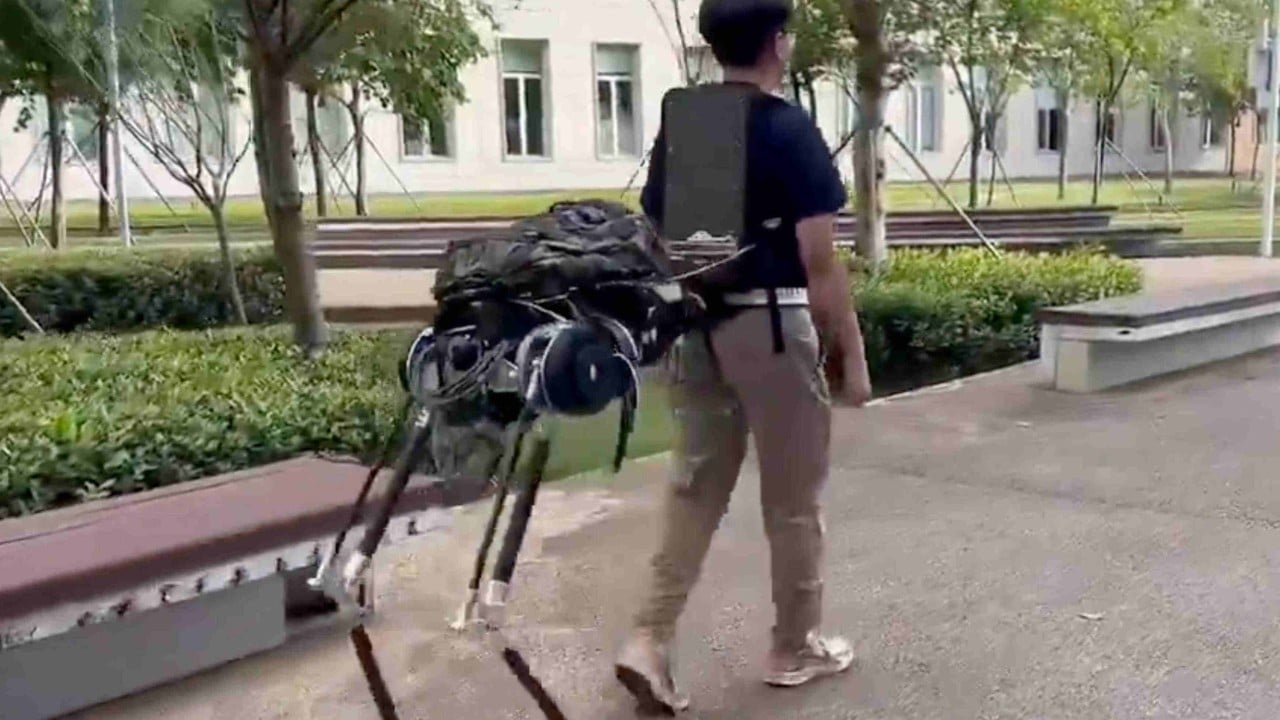
Chinese researchers have built a wearable human-machine system they describe as a kind of centaur robot: a non-invasive lower-body device meant to help a person walk farther, carry heavier loads, and stay stable in difficult terrain. The military framing in the coverage is what grabs attention, but the more durable takeaway is that exoskeleton development is shifting from simple power assistance toward systems that try to blend with the user's motion rather than just bolt extra force onto it. That is technically harder because the machine has to sense intent quickly and coordinate with a body that is never perfectly regular. If the approach works, the first practical uses may be broader than soldiers. Logistics workers, rescue crews, and people in rehabilitation all need assistance that extends endurance without requiring invasive surgery. The story is a reminder that "robotics" increasingly means wearable augmentation as much as humanoid machines or factory arms, especially in countries treating physical-AI systems as a strategic industry.
The PLA has already tested exoskeleton systems for load carrying and mobility. The next design challenge is making those systems more adaptive and comfortable so they help in messy real-world movement rather than only in controlled demonstrations.
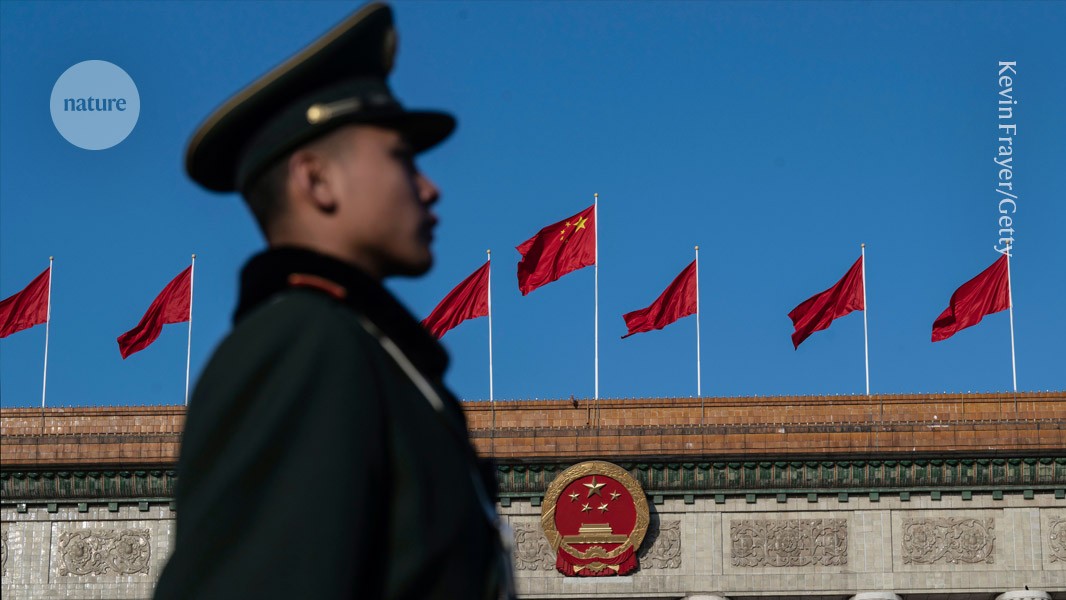
China's new 2026-2030 five-year plan puts unusual emphasis on original research, advanced technology, and AI self-reliance, which is Beijing's way of saying it no longer wants to depend on foreign chokepoints for the highest-value parts of the innovation stack. That framing matters because earlier industrial policy often focused on scaling manufacturing and catching up. The newer language is about producing first-rate science, core technologies, and research systems that can survive export controls and strategic rivalry with the United States. The plan reportedly calls for faster growth in research spending and a bigger role for basic science, not just near-term commercialization. Whether that produces true breakthroughs is harder to judge than the spending headlines. Central planning can build capacity, but original discovery is harder to order up than factories or industrial parks. Still, the policy signal is clear: Beijing sees science as state capacity, not just prestige, and wants frontier research treated as part of long-run geopolitical competition.
China has spent years trying to move from manufacturing scale to technology leadership while facing tighter US restrictions on semiconductors and other advanced tools. The new plan suggests that pressure is reinforcing, not weakening, the push toward domestic scientific capacity.
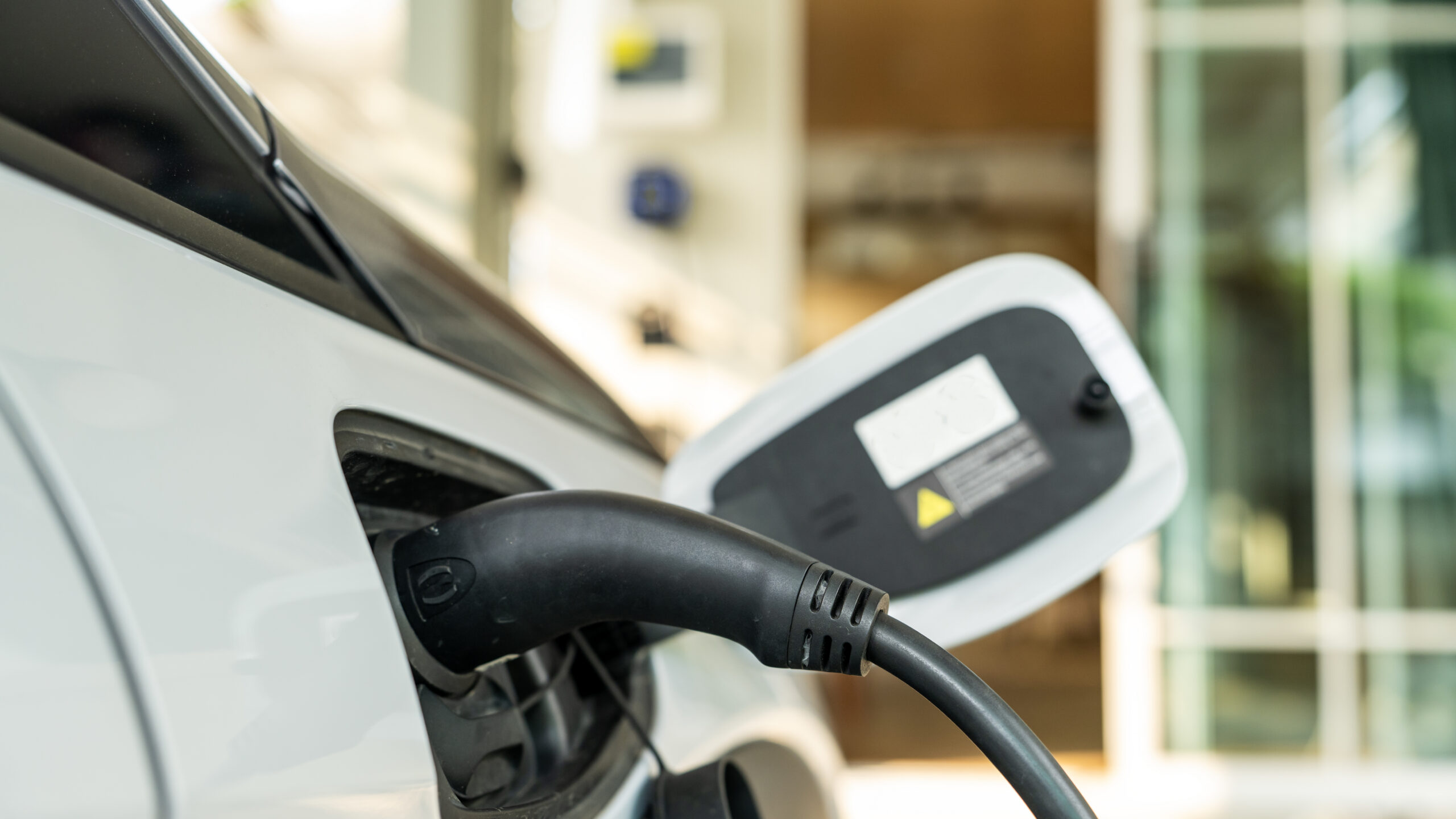
The move from 400-volt to 800-volt electric-car systems sounds like a spec-sheet arms race, but the engineering payoff is pretty concrete. For the same amount of power, higher voltage means lower current, which reduces heat, eases stress on cables and components, and makes very fast charging more realistic without turning the hardware into a thermal headache. That is why 800-volt architecture is starting to matter outside luxury models: it can improve charging speed, efficiency, and packaging at the same time. The catch is that the ecosystem has to catch up. Carmakers need power electronics built for higher voltage, charging stations have to support the right hardware, and some vehicles still need conversion tricks to work well on older 400-volt chargers. So this is not a magical threshold where every EV suddenly gets better overnight. It is a sign that the industry is trying to solve one of its most stubborn practical problems: making charging feel less slow, less fragile, and less like a compromise.
Most early EVs used 400-volt systems, which were simpler and adequate when charging speeds were lower. As buyers started demanding shorter stops and bigger batteries, higher-voltage architectures became one of the clearest ways to deliver more power without proportionally more heat.