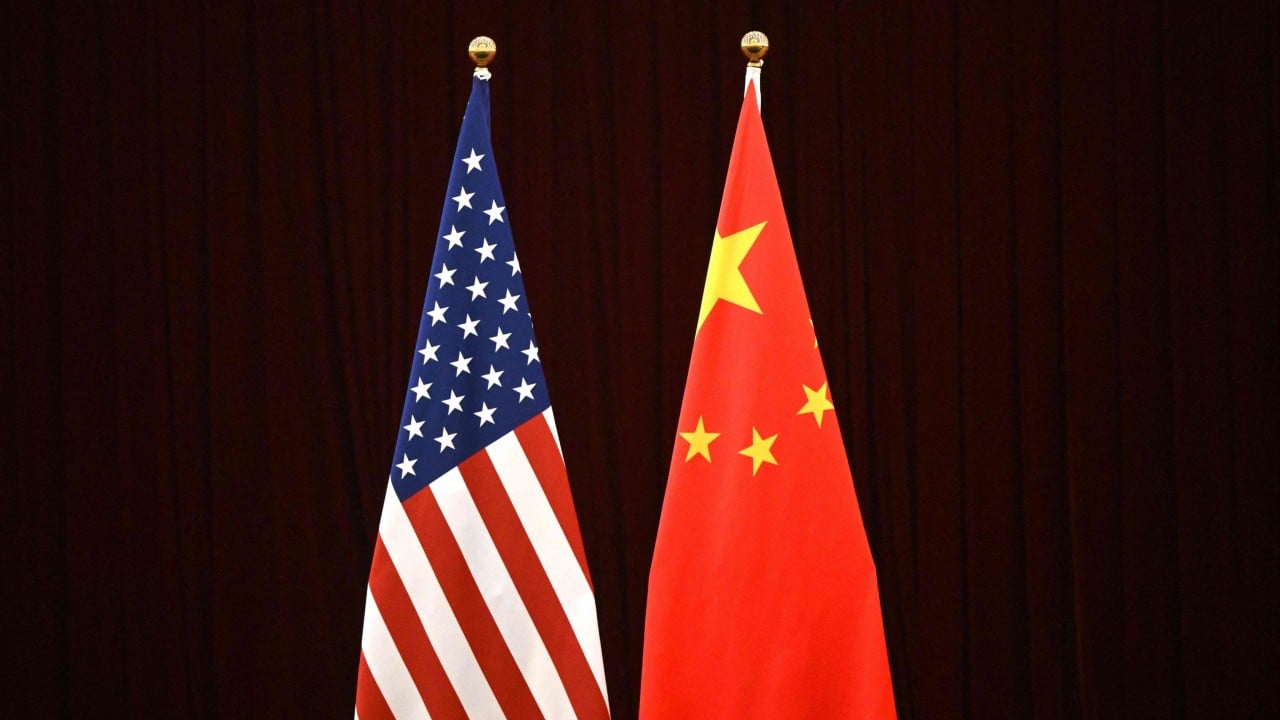
Chinese Vice-Premier He Lifeng and US Treasury Secretary Scott Bessent opened a new round of trade talks in Paris on Sunday, trying to stabilize an economic relationship that has been whipsawed by tariffs, export controls, and fights over critical minerals. The meetings, held at the OECD headquarters, are expected to focus on rare earths, investment rules, and the remaining barriers that still sit on top of last year's Geneva and London understandings. The immediate goal is narrower than a grand bargain: both sides appear to be trying to clear enough underbrush for President Trump's expected trip to Beijing later this month without another blowup in the interim. That makes the venue and the personnel matter. Paris suggests a lower-temperature, technocratic channel, but the agenda is still about the hard stuff: supply-chain leverage, manufacturing security, and how much economic decoupling each side is actually willing to absorb.
Washington and Beijing have spent the past year moving between tariff truces and fresh restrictions. Rare earths and other strategic inputs have become central because each side now sees trade policy as part of national-security competition, not just market access.
Meta is reportedly preparing another major layoff round, with Reuters saying the cuts could reach 20 percent of staff, or roughly 15,000 jobs. The logic is blunt: the company wants room to keep pouring money into data centers, AI infrastructure, and expensive talent packages for top researchers without letting payroll keep growing on top of that. If the number holds, it would be Meta's deepest retrenchment since the 2022-23 wave that marked Mark Zuckerberg's so-called year of efficiency. What is different now is the stated tradeoff. Earlier cuts were framed as a post-pandemic correction after overhiring; this round looks more like a structural decision to shift spending from ordinary headcount toward chips, compute, and a smaller set of highly paid AI teams. That is a useful signal about where big-tech balance sheets are heading as the AI race gets more capital-intensive.
Meta has already spent years reorganizing around AI while Reality Labs continues to burn cash. The broader market is rewarding companies that promise aggressive AI investment, which creates pressure to cut elsewhere if revenue growth does not keep pace.
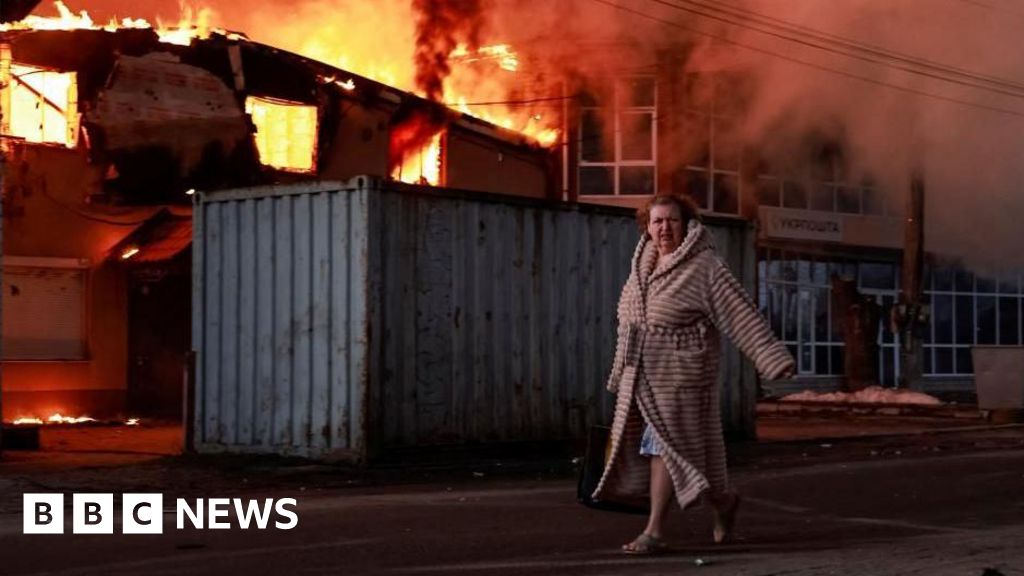
President Volodymyr Zelensky said Russia is using the war with Iran as strategic cover after a fresh overnight bombardment killed at least five people in Ukraine and renewed pressure on the country's air defenses. His warning is less about rhetoric than timing: Kyiv fears that as Washington shifts attention and missile stocks toward the Middle East, Moscow sees a window to push harder before Ukrainian interceptors can be replenished. That makes the story about resource competition as much as battlefield violence. The same Patriot systems and munitions that protect Ukrainian cities from missile strikes are suddenly part of a wider regional scramble, and Zelensky is trying to keep Ukraine from slipping into the background while US policymakers manage a second major war theater. Even if the Kremlin did not cause the diversion, it has obvious incentives to benefit from it.
Ukraine has depended heavily on Western air-defense missiles, especially US-made interceptors, to protect cities and power infrastructure. The Iran war has raised fears in Kyiv that limited stocks could be redirected or delayed just as Russia intensifies long-range strikes.
Surgeon general nominee Casey Means has now said in written responses that people should get vaccinated against measles, a more direct position than the one she offered at her Senate hearing last month. At that hearing, she said vaccines save lives but repeatedly avoided a clean recommendation when senators pressed her about MMR shots during a period of unusually high measles activity. The clarification matters because the surgeon general's job is partly communicative: it is less about discovering new science than about telling the public, plainly, what the government believes they should do. Means is now moving closer to that standard, but the awkward sequence also shows how much vaccine messaging has been politicized inside Trump's health team. If confirmed, she will still face the harder test of whether she is willing to keep giving simple, pro-vaccination guidance once it conflicts with the instincts of the broader MAHA coalition.
Means drew scrutiny in late February after declining to give an unequivocal recommendation for routine childhood vaccination. The issue landed badly because measles outbreaks have become a live national test of how the Trump administration's health appointees will talk about basic public-health advice.
ByteDance has reportedly paused the global launch of its new video model, Seedance 2.0, after copyright disputes with major Hollywood studios and streaming companies. If the report is correct, the delay is a reminder that the next AI bottleneck is not always model quality or GPU access; it is whether companies can get enough legal clearance to ship generative tools without inviting a wave of litigation. That is especially acute in video, where training data is harder to defend as fair use and the commercial stakes are larger than in text chatbots. ByteDance had been trying to position Seedance as part of a broader push beyond TikTok into high-end generative media. Instead, it may now be discovering the same thing Western labs have been learning piecemeal: the more realistic and commercially useful the outputs become, the harder it is to pretend rights holders will stay passive.
Generative-video systems are moving from demo reels toward ad production, editing, and entertainment workflows. That makes training data more legally contentious because studios now see direct competition, not just research experiments.
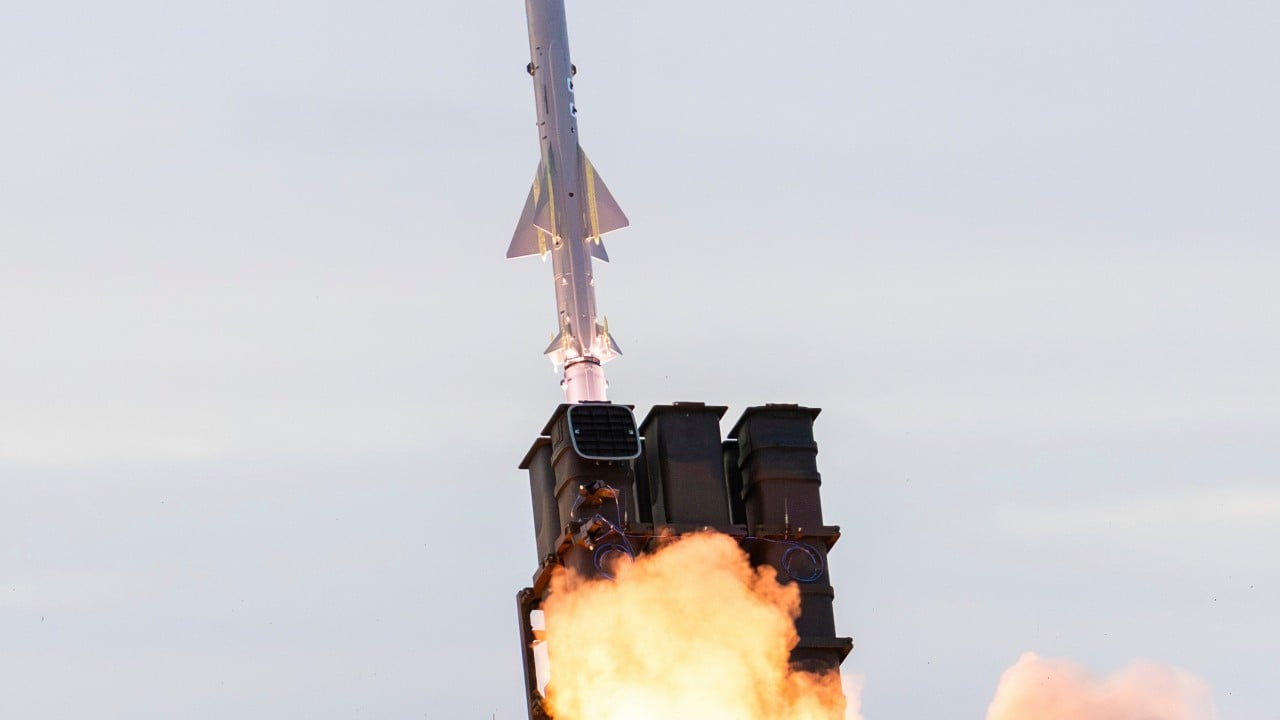
Japan's deployment of upgraded Type-12 missiles in Kumamoto is small in immediate military terms but large in strategic symbolism. The new version has a much longer reach than the older coastal-defense system, which means a weapon once framed as a shield for nearby waters can now threaten targets much farther from Japan's main islands. Chinese analysts are reading that as another sign that Tokyo is moving away from a strictly defensive posture and building the ability to strike into contested regional spaces. From Japan's perspective, the argument is straightforward: Chinese naval activity has increased around the East China Sea and near Taiwan, and longer-range missiles are supposed to deter adventurism before it starts. The tension is that both stories can be true at once. A capability built for deterrence by one side is usually seen as a threshold crossing by the other.
Japan has been revising its security posture for years as China expands its naval and air activity and as concern over a Taiwan crisis grows. The improved Type-12 is one piece of a broader push toward longer-range, more self-reliant deterrence.
Air China will resume direct flights between Beijing and Pyongyang on March 30, reopening a route that has been dormant for six years. On paper that is a narrow transport story. In practice it is another sign that China and North Korea are rebuilding ordinary links after years of pandemic isolation, sanctions pressure, and disrupted cross-border travel. Train service had already begun to restart; commercial flights make the normalization harder to dismiss as symbolic. The route does not mean a dramatic geopolitical shift by itself, but it does show that Pyongyang is becoming more connected to its main external partner at a moment when regional security is already tense. For Beijing, restoring predictable traffic also gives it another low-key way to stabilize a neighboring regime it would rather influence than rescue during a crisis. Transport links are often the least dramatic signals and the most durable ones.
North Korea sharply restricted international travel during the pandemic, and many cross-border services never fully returned. China remains Pyongyang's main trading partner and diplomatic backstop, so even limited transport reopening carries political meaning.
Formula 1 and the FIA have canceled April races in Bahrain and Saudi Arabia, citing safety risks tied to the Iran war. The sports angle is secondary; what makes the decision notable is that it converts a distant geopolitical crisis into a visible commercial disruption with a clear international timetable. Grand prix weekends involve freight flights, security plans, regional staff movement, sponsor events, and thousands of travelers. When even that machinery cannot be made to work safely, it is a sign that insurers, organizers, and teams think the conflict has moved beyond headline risk into ordinary operational risk. In other words, this is what war looks like once it starts leaking into the calendars of institutions that usually assume the Gulf will remain open for business. The cancellation also undercuts the narrative that the conflict can stay tightly compartmentalized around military targets and shipping lanes.
Bahrain and Saudi Arabia have become core stops on the Formula 1 calendar and symbols of the Gulf's effort to use sports as part of economic diversification. Canceling both races is unusual because the series normally bends hard to preserve major commercial events.
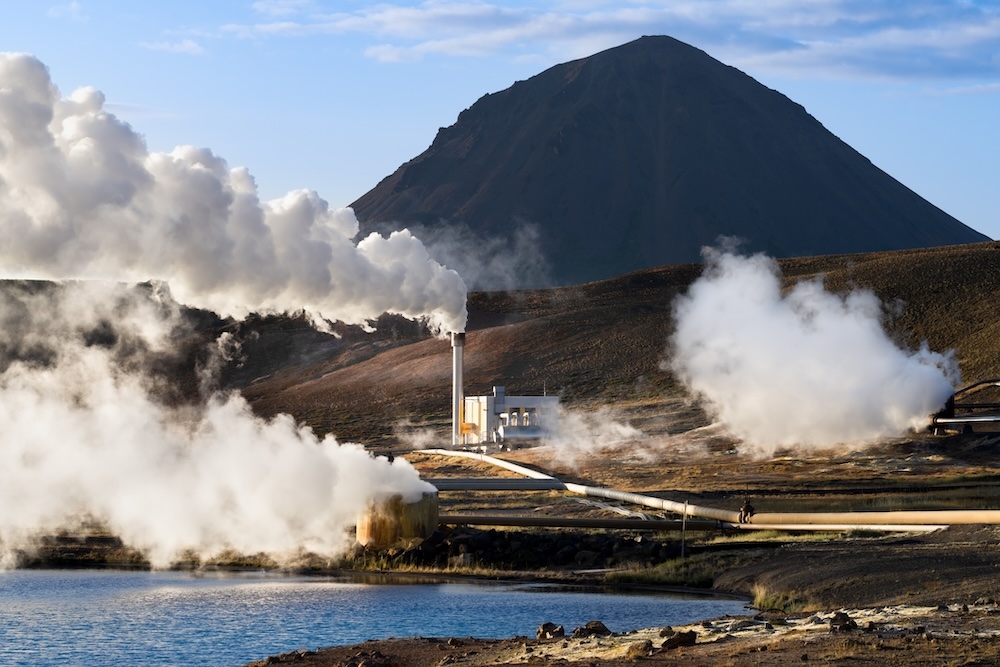
The interesting part of the new geothermal push is not that people suddenly discovered heat underground; it is that drilling, subsurface mapping, and reservoir engineering may finally be good enough to tap it in many more places. Researchers and startups are trying to build EGS projects that fracture or reopen deep hot rock, circulate fluid through it, and pull back steady carbon-free power without needing a naturally perfect geothermal field. If that works at scale, geothermal stops being a regional specialty and starts looking more like firm clean electricity that can complement solar and wind instead of competing with them. The catch is that the engineering is unforgiving: drilling is expensive, underground geology is messy, and heat extraction can fall off if reservoirs are modeled too optimistically. Still, the field now looks less like speculative climate-tech branding and more like an energy bet with a plausible path to industrial usefulness.
Traditional geothermal power mostly works where hot water and favorable geology are already near the surface. Enhanced geothermal aims to broaden the map by using oil-and-gas-style drilling and reservoir techniques to manufacture those conditions deeper underground.
A long-running materials-science argument may be getting closer to resolution. Researchers now say they have the strongest evidence yet for lonsdaleite, a hexagonal form of diamond that has been debated for decades because past claims often turned out to be ordinary diamond mixed with structural defects. The reason people care is not just taxonomy. If the structure can be produced cleanly and reliably, it could have different mechanical or electronic properties from standard cubic diamond, which would matter for high-performance tools and possibly some specialized devices. The paper does not mean industry can suddenly mass-produce exotic super-diamond next year, and the field has earned some skepticism after earlier overclaims. But the result does seem more careful about distinguishing a genuinely different crystal arrangement from a damaged version of the familiar one. That is real scientific progress even before anyone figures out what it is good for.
Ordinary diamond has a cubic crystal structure. Lonsdaleite, sometimes called hexagonal diamond, has been reported in meteorite impacts and high-pressure experiments, but proving it exists as a distinct material has been harder than headlines often suggest.