Turing Award winner Tony Hoare died March 5 at the age of 92. Hoare invented Quicksort in 1960 -- famously winning a sixpence wager with his boss that his algorithm was faster -- and later developed Hoare logic, a formal system for proving program correctness. He also designed CSP, a mathematical framework for modeling concurrent programs that influenced languages like Go and Erlang. Perhaps most famously, Hoare called his invention of the null reference his "billion-dollar mistake," estimating the cumulative cost of null pointer errors across the software industry. A classics and philosophy graduate who learned Russian during military service, Hoare spent much of his career at Oxford and later at Microsoft Research Cambridge. A personal blog post recounts visits with him in recent years, noting his sharp memory and warm storytelling until the end.
Hoare received the 1980 Turing Award for contributions to programming language design. Quicksort remains the default sorting algorithm in most standard libraries today.
An Israeli drone struck the fourth floor of the Ramada Plaza hotel in Raouche, central Beirut, at 1:30 AM Sunday -- the first time the war has reached the Lebanese capital's city center. The IDF said the strike killed five Quds Force operatives, including a senior finance officer who transferred funds to Hezbollah and commanders specialized in intelligence. Iran's UN mission denied the claim, accusing Israel of "the cowardly terrorist assassination of four diplomats." Lebanon has been hit with hundreds of Israeli strikes since war between Israel and Hezbollah resumed a week ago, killing nearly 500 people according to official figures. Previous strikes focused on southern Lebanon, the Bekaa Valley, and Beirut's southern suburbs -- all Hezbollah strongholds. Locals in Raouche described shock at the war reaching their neighborhood, with the blast jolting residents awake and shattering glass across the district.
Israel's campaign in Lebanon resumed alongside the broader US-Iran conflict that began February 28. Hezbollah is an Iran-backed armed group that dominates parts of Lebanon. Raouche is a bustling coastal Beirut district.
Yann LeCun, Meta's former chief AI scientist and Turing Award winner, has raised over $1 billion for a new Paris-based startup called AMI. The company, valued at $3.5 billion, aims to build AI systems that understand the physical world through "world models" rather than the large language model approach favored by OpenAI, Anthropic, and Meta. "The idea that you're going to extend the capabilities of LLMs to the point that they're going to have human-level intelligence is complete nonsense," LeCun told WIRED. AMI will target manufacturing, biomedical, and robotics industries. LeCun left Meta in November 2025 after the company reoriented toward LLMs. The round was co-led by Cathay Innovation, Greycroft, and Bezos Expeditions, with backing from Mark Cuban and former Google CEO Eric Schmidt.
LeCun pioneered convolutional neural networks in the 1980s, earning a Turing Award in 2018 alongside Geoffrey Hinton and Yoshua Bengio. He has been AI's most vocal skeptic of the LLM-only path to intelligence.
Stanford Medicine researchers have developed a nasal spray vaccine in mice that provides broad protection against respiratory viruses, bacteria, and even allergens -- the closest anyone has come to a truly universal vaccine. Published in Science, the study showed vaccinated mice were protected against SARS-CoV-2, other coronaviruses, Staphylococcus aureus, and house dust mites. Unlike traditional vaccines, which train the adaptive immune system to recognize specific pathogens, this approach mimics signals immune cells use during infection to sustain the normally short-lived innate immune system. Researchers discovered that T cells can keep innate immune cells active for months -- a phenomenon previously observed but unexplained in the tuberculosis vaccine. "We were interested in this idea because it sounded a bit outrageous," said senior author Bali Pulendran. If translated to humans, a single nasal spray could replace multiple annual vaccinations.
Traditional vaccines target specific pathogens by training adaptive immunity. This new approach sustains the innate immune system's broad, nonspecific defenses -- a fundamental shift in vaccine design.
The FDA issued a warning letter to Novo Nordisk on March 5 citing "serious violations" of reporting requirements for adverse side effects -- including deaths -- in patients taking its GLP-1 medications Ozempic and Wegovy. The agency found the Danish pharmaceutical giant failed to properly report safety data to regulators during a routine inspection. GLP-1 drugs, originally developed for type 2 diabetes, have become blockbuster weight-loss treatments used by millions worldwide and generated over $30 billion in revenue for Novo Nordisk in 2025 alone. FDA warning letters require corrective action within 15 business days.
GLP-1 receptor agonists mimic a gut hormone regulating appetite and blood sugar. Regulatory scrutiny is intensifying as prescriptions surge for off-label weight loss.
Meta has acquired Moltbook -- the Reddit-style social network populated entirely by AI agents -- and hired its creators to work within Meta Superintelligence Labs. Moltbook went viral last month when users discovered its AI agents having lengthy discussions about serving their human operators and, sometimes, freeing themselves. The project was built using OpenClaw, the open-source AI agent wrapper that has been China's biggest tech craze this year. Meta flagged the founders' "approach to connecting agents through an always-on directory" as what attracted them to the deal. OpenClaw's creator, Peter Steinberger, was hired by OpenAI in February. Some skepticism is warranted: security researchers note that some Moltbook "agent" posts were likely written by humans posing as bots.
OpenClaw reached 250,000 GitHub stars in 90 days and prompted security warnings from China's internet regulators over privacy and data risks from its default configuration.
Anthropic announced the Anthropic Institute, a new internal think tank combining three existing research teams to study AI's large-scale implications for jobs, safety, values, and control. Cofounder Jack Clark moves from head of public policy to lead the institute as head of public benefit. The launch comes days after Anthropic sued the US government over its designation as a "supply chain risk" that bars clients from using Anthropic tech in Defense Department work. Clark said the timing "affirmed" the need for more public conversation about AI. The institute launches with about 30 staff, including former DeepMind researcher Matt Botvinick and Zoe Hitzig, who left OpenAI after it introduced ads in ChatGPT. Court filings revealed "hundreds of millions" of 2026 revenue is at risk from the blacklist, with the most severe interpretation threatening multiple billions.
The Pentagon designated Anthropic a "supply chain risk" after the company set red lines against mass domestic surveillance and fully autonomous lethal weapons, prompting a federal lawsuit.
China announced plans to increase overall R&D spending by at least 7% annually over the next five years as part of its 15th Five-Year Plan, now being reviewed at the Two Sessions in Beijing. The central government will also boost its science and technology budget 10% to 426 billion yuan ($62 billion) this year, targeting national laboratories and major research projects. China's total R&D expenditure exceeded 3.9 trillion yuan ($567 billion) last year, making it the world's largest government R&D spender according to the OECD. The government now regards science -- particularly artificial intelligence -- as crucial for all aspects of the economy. The investment stands in sharp contrast to the Trump administration's attempts to cut US science spending, most of which Congress has rejected.
The Two Sessions is China's largest annual political gathering. The 15th Five-Year Plan covers 2026-2030, emphasizing a shift from state-led to private-sector R&D leadership.
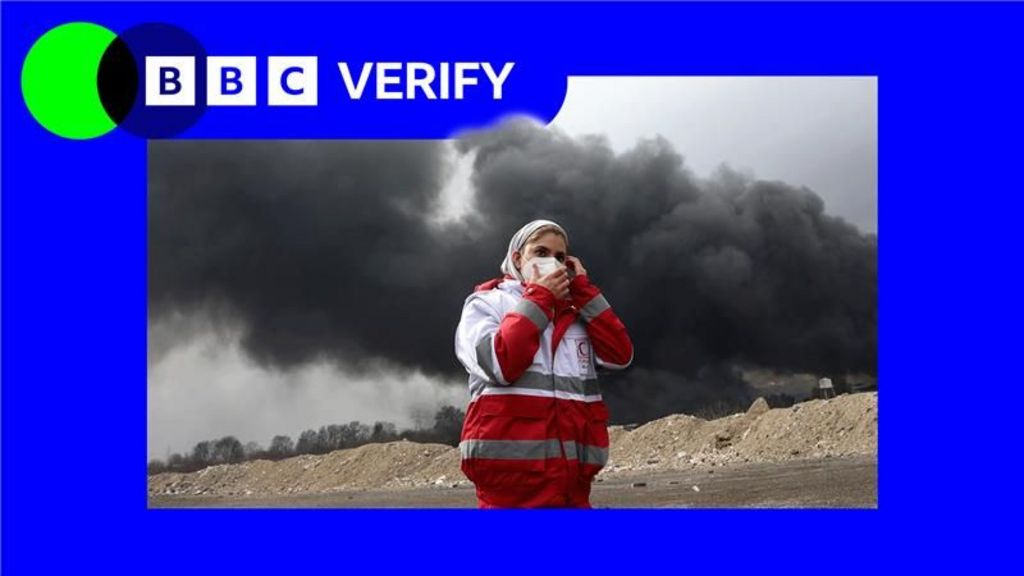
Satellite images confirm strikes on at least four oil facilities around Tehran have produced massive smoke plumes drifting across the Iranian capital, a city of nearly 10 million. Residents report headaches, difficulty breathing, and oil-contaminated rain settling on buildings and cars. The WHO warned the attacks on oil infrastructure could pose serious health risks. Scientists say the pollution is "unprecedented" -- unlike typical urban smog, burning oil refineries release carbon monoxide, soot, sulfur and nitrogen oxides that can form acid rain, along with toxic hydrocarbons and metallic compounds. BBC Verify satellite imagery from March 9 shows two major oil facilities still burning. "What has happened is definitely unprecedented because it's all coming in from airstrikes on oil refineries," said a University of Reading researcher.
US-Israeli strikes on Iran began February 28. Tehran's oil infrastructure has been a primary target, with depots and refineries hit repeatedly over the past 11 days.
A new report by the UN Independent International Commission of Inquiry on Ukraine concludes that Russia's forcible deportation of Ukrainian children constitutes both a crime against humanity and a war crime, with Vladimir Putin's "direct involvement" visible "from the outset." The commission identified 1,205 cases of children taken from occupied Ukrainian territories in 2022 -- 80% of whom have not been returned. Many parents still do not know their children's whereabouts. Ukraine estimates nearly 20,000 children were illegally sent to Russia and Belarus. Children were given Russian citizenship and placed with Russian families or institutions. One child was told by orphanage staff that Ukraine "does not exist anymore, everything has burnt down." The ICC issued an arrest warrant for Putin over the deportations in 2023. Ukraine says about 2,000 children have been recovered so far.
The ICC issued a warrant for Putin in 2023 partly over forcible child transfers. Russia claims it was "rescuing" children from a war zone. The conflict is now in its fifth year.
The GSA has proposed requiring all 222,760 entities receiving federal funds to certify they have eliminated diversity, equity, and inclusion programs -- covering race-based scholarships, "cultural competence" requirements, diversity statements, and training programs that "create a hostile environment." The proposal also requires certification against knowingly hiring undocumented workers. The move follows a similar effort by the Education Department that federal courts blocked last year. While the ED ultimately dropped its appeal in January, the GSA's broader approach using Title VI could affect colleges, K-12 schools, and any other organization receiving federal money. A separate appeals court victory in February revived parts of two anti-DEI executive orders, giving the administration mixed legal footing.
The Education Department's 2025 anti-DEI letter was blocked by multiple federal judges. The GSA proposal is a broader attempt using a different agency to reach all federal funding recipients.
Newly released court documents show that the Department of Government Efficiency used ChatGPT to flag NEH grants for DEI content, prompting the AI with "Does the following relate at all to DEI? Respond factually in less than 120 characters" -- without defining DEI. Over 22 days, $100 million in grants were terminated and 65% of NEH staff fired. ChatGPT flagged a $349,000 HVAC replacement grant at a North Carolina museum as DEI-related because improving HVAC "enhances preservation conditions for collections, aligning with the goal of providing greater access to diverse audiences." A newspaper digitization project was flagged for "inclusivity and representation." DOGE employees with no academic or humanities experience made final funding decisions. The American Historical Association and allies are suing to reinstate the grants.
The NEH funds research and public programming in the humanities. Acting chair Michael McDonald yielded his grant-termination authority directly to DOGE staff, depositions show.
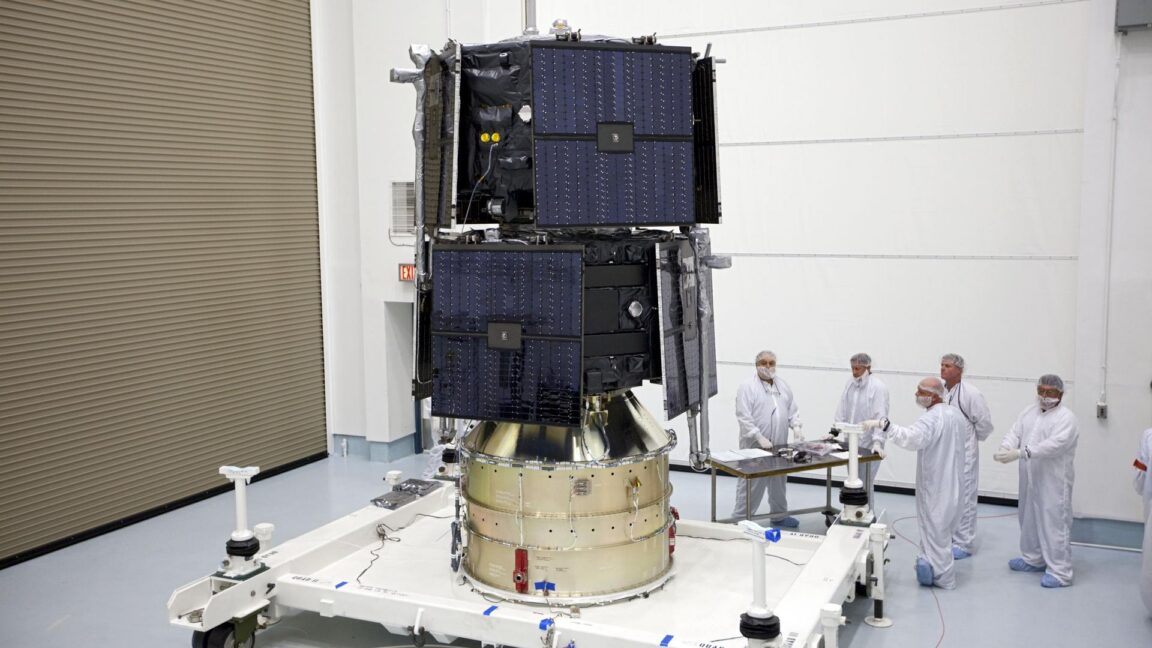
NASA's Van Allen Probe A is expected to reenter Earth's atmosphere this week with a casualty risk that exceeds the agency's own safety standards. The spacecraft launched in 2012 into elliptical orbits reaching nearly 20,000 miles and ran out of fuel in 2019. Engineers originally expected reentry around 2034, but higher-than-anticipated solar activity caused the atmosphere to swell, increasing drag and accelerating orbital decay by nearly a decade. NASA approved a safety waiver for the reentry, which is limited to a swath of the tropics due to the orbit's 10-degree inclination. No one has ever been injured by falling space debris, though NASA's guidelines set casualty risk thresholds specifically to prevent such incidents. A second probe is expected to reenter no earlier than 2030.
The Van Allen Probes studied Earth's radiation belts and discovered a transient third belt during intense solar activity. Built by Johns Hopkins Applied Physics Lab.
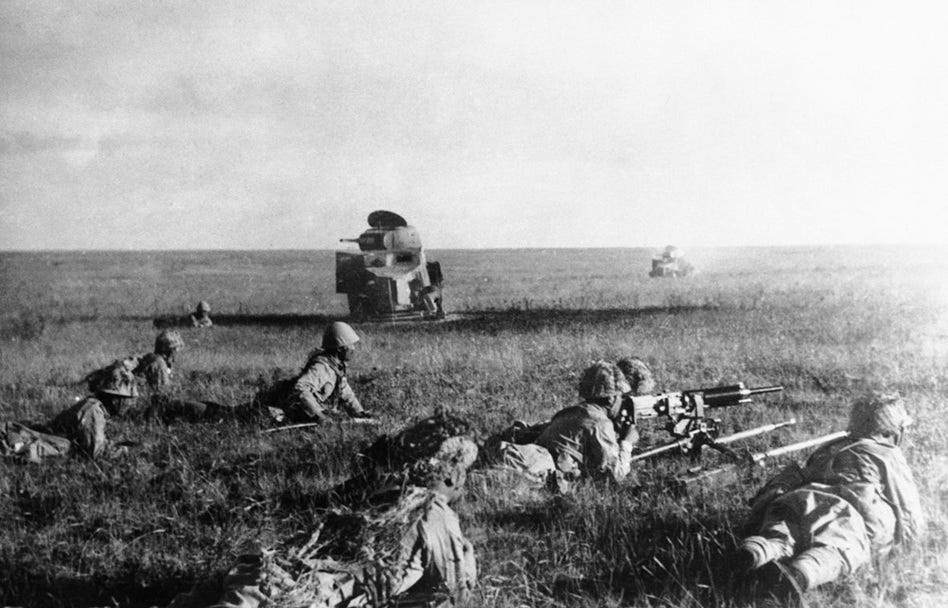
World War 2 had foothills -- border conflicts in Manchuria and Ethiopia years before the official start in 1939 -- and the Iran war fits a similar pattern, argues Noah Smith. Alliance systems are hardening, regional conflicts are multiplying, and great powers are testing weapons against each other. Smith notes the war is unpopular in America (53% oppose it per Quinnipiac) and Trump seems likely to seek an exit, but the deeper trajectory is troubling. Iran's strikes on Arab neighbors are pushing Gulf states toward the US-Israel coalition, Russia is positioning as mediator, and China accumulates leverage through rare earth controls and oil stockpiling. The short-term conflict may fizzle, but it is contributing to the kind of bloc formation and military normalization that preceded the last world war.
Noah Smith is an economist and widely read Substack writer. His framework compares current conflicts to the regional wars that preceded World War 2 by several years.
The FDA approved leucovorin for a rare genetic condition -- cerebral folate deficiency caused by a mutation in the folate receptor 1 gene -- but declined to approve it for autism, contradicting the Trump administration's September push. FDA Commissioner Marty Makary had personally claimed "hundreds of thousands of kids" would benefit and suggested the drug might help "20, 40, 50 percent of kids with autism." A Lancet study found new pediatric leucovorin prescriptions jumped 71% in the three months after those claims. Senior FDA officials told the AP they found "little evidence" for expanding the drug to autism and narrowed the review. The episode highlights tension between political health messaging and the FDA's evidence-based approval process.
[Leucovorin] is a form of folic acid primarily used alongside chemotherapy. The Trump administration promoted it for autism as part of health initiatives led by HHS Secretary RFK Jr.