The FBI and multiple law enforcement agencies are responding to a vehicle ramming and active shooter incident at Temple Israel, a large Reform Jewish synagogue in West Bloomfield, Michigan. Oakland County Sheriff Michael Bouchard confirmed that a suspect approached a security guard, leading to an exchange of gunfire, and rammed a vehicle into the building. Smoke was seen billowing from the roof. As of Thursday afternoon, no injuries have been confirmed and the suspect remains at large. Temple Israel has more than 3,000 members, making it one of the largest Reform Jewish congregations in the US, and houses a preschool and early childhood learning center. Neighboring schools and a daycare were evacuated, and all Jewish facilities in the area were placed under increased police presence. Michigan Governor Gretchen Whitmer called the attack "heartbreaking," saying "antisemitism and violence have no place in Michigan." The Jewish Federation of Detroit placed all local Jewish organizations into lockdown protocol.
Temple Israel of West Bloomfield is in Oakland County, a suburb northwest of Detroit. It is one of the largest Reform Jewish congregations in the US with more than 3,000 members. The synagogue complex includes a preschool and early childhood learning center. Armed security guards are typically posted at the facility.
Mojtaba Khamenei, Iran's new supreme leader, has issued his first public statement since succeeding his father, who was killed in a US-Israeli airstrike in late February. In remarks read on Iranian state television Thursday, Khamenei vowed to keep the Strait of Hormuz closed and pledged to avenge Iran's dead. "The lever of blocking the Strait of Hormuz must definitely be used," he said of the waterway through which roughly a fifth of the world's oil passes. He called on Gulf Arab states to close US military bases in the region "as soon as possible," arguing that America's claims of providing regional security have been exposed as lies. The defiant tone signals that Iran's new leadership intends to continue rather than de-escalate the confrontation with the US and Israel that has already sent global oil prices past $120 per barrel and forced emergency fuel measures across Asia.
Mojtaba Khamenei was selected by Iran's Assembly of Experts to succeed his father in early March 2026, days after Ali Khamenei was killed in a US-Israeli airstrike. The Strait of Hormuz has been effectively blockaded since Iran began retaliating, cutting off a critical chokepoint for global energy supplies.
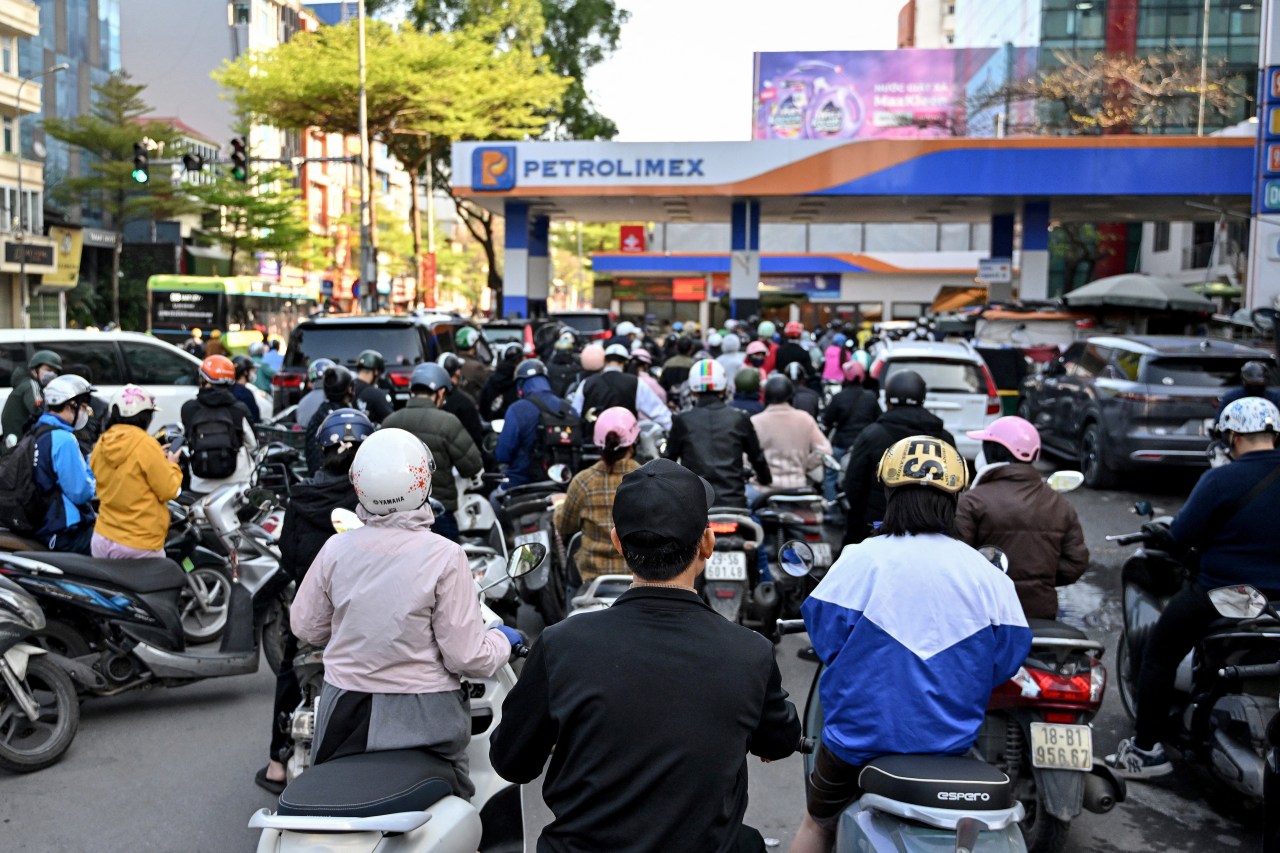
Governments across Asia are imposing emergency energy-saving measures as the Iran war chokes oil supplies from the Middle East. Thailand ordered civil servants to take stairs instead of elevators, work from home, and raise office air conditioning to 27 degrees Celsius. The Philippines shifted to a four-day government workweek. Bangladesh brought forward the Eid al-Fitr holiday so universities could close early. Pakistan also adopted a four-day week and closed schools. India suspended commercial LPG shipments to prioritize households, threatening hotels and restaurants with closure. South Korea announced petroleum price caps after roughly 1.7 million barrels per day of Korea-bound oil were cut off. Japan has not ruled out tapping national reserves. Indonesia set aside $22.6 billion for energy subsidies. The measures underscore Asia's extreme dependence on Gulf oil: Japan sources 90% and South Korea 70% of their crude from the Middle East.
The Strait of Hormuz has been effectively closed to commercial shipping since Iran began blockading the waterway. The IEA agreed Tuesday to release a record 400 million barrels from emergency stockpiles, but prices remain volatile. Analyst forecasts range up to $200 per barrel if the disruption persists.
Newly released deposition videos show Justin Fox, a former private equity associate who joined DOGE with no government experience, explaining how he used ChatGPT to scan federal grant descriptions at the NEH for terms like "Black," "homosexual," and "LGBTQ+" but not "white," "caucasian," or "heterosexual." Fox described the AI as an "intermediary step" before review, with a prompt asking it to flag DEI-related grants in under 120 characters. Asked about a documentary on Black civil rights, Fox initially said the work was "not for the benefit of humankind" because it "focused on a specific race," then walked the claim back. Over six hours, Fox could not define what DEI means, deferred repeatedly to an executive order he could not recall, and expressed no remorse for affected grant recipients. Co-founder Nate Cavanaugh separately acknowledged that DOGE's actions did not reduce the federal deficit. Fox's DOGE salary was $150,000 per year.
DOGE, led by Elon Musk, was created by executive order to cut federal spending. Its operatives, many young and recruited from the private sector, gained access to federal agencies and slashed billions in grants and contracts. The depositions were released as part of a lawsuit by the Modern Language Association, American Council of Learned Societies, and American Historical Association.
Honda has scrapped its three planned US-manufactured electric vehicles, the Honda 0 Saloon, Honda 0 SUV, and a new electric Acura RDX, citing a triple squeeze of tariffs, rolled-back US emissions regulations, and inability to compete with Chinese EV makers. In China, Honda admitted it cannot match the rapid development cycles and software-rich vehicles from domestic competitors, "resulting in a decline in competitiveness." In the US, weak demand and the elimination of the federal clean vehicle tax credit made launching the vehicles financially untenable. The company will instead expand its hybrid lineup in the American market, greenlighting future EVs only when demand and profitability targets are met. Senior executives will take voluntary pay cuts of 20-30% for three months. The retreat mirrors Ford's decision to end F-150 Lightning production in late 2025, marking a broader pullback by legacy automakers from US electric vehicle manufacturing.
Honda had planned to manufacture its 0-series EVs at a new US facility. The cancellation comes as Chinese automakers like BYD rapidly gain global market share with cheaper, software-focused electric vehicles, while the Trump administration has rolled back emissions rules and ended EV tax credits.
The interstellar comet 3I/ATLAS, only the third known object to visit our solar system from another star, turns out to be extraordinarily rich in methanol, far exceeding levels found in any comet native to our system. New measurements from the ALMA observatory in Chile show the comet is "heavily enriched" in the alcohol, a chemical fingerprint from whatever distant star system forged it. "Observing 3I/ATLAS is like taking a fingerprint from another solar system," said Nathan Roth, a researcher at American University. When a typical comet nears the sun, its ice sublimates into gases like carbon monoxide, methane, and ammonia, sometimes with traces of methanol. But 3I/ATLAS produces methanol in dramatically higher proportions. The finding, posted on arXiv and not yet peer-reviewed, could help astronomers narrow down the comet's origin. Discovered in July 2025, the comet is still being tracked by ESA's Jupiter Icy Moons Explorer.
Interstellar objects are extremely rare. Only three have ever been detected passing through our solar system. The first, 1I/'Oumuamua, was spotted in 2017 and sparked debate about whether it might be artificial. The second, 2I/Borisov, arrived in 2019. Each provides a sample of material formed around a different star.
A new programming language called Codespeak takes a radical approach to software development: instead of writing implementation code, engineers write formal specifications that LLMs translate into working programs. The result is codebases 5-10x smaller than conventional equivalents. Created by a team with roots in the Kotlin language ecosystem, Codespeak targets production systems and engineering teams rather than quick prototypes. Case studies from real open-source projects demonstrate the compression: an Italian social security number generator for the Faker library shrank from 165 lines of Python to 21 lines of spec (7.9x), and an EML converter for Microsoft's MarkItDown went from 139 lines to 14 (9.9x), with all existing tests still passing. The language supports mixed-mode projects where some files remain hand-written code and others are specs, letting teams migrate incrementally. Codespeak is currently in alpha preview.
Traditional programming requires specifying implementation details line by line. Codespeak inverts this by having engineers describe intended behavior in structured specifications while an LLM handles the implementation. The concept goes beyond existing AI coding assistants: the spec becomes the source of truth, not the generated code.
Senegal's parliament has overwhelmingly approved legislation doubling the maximum prison sentence for same-sex sexual acts from five to ten years and criminalizing the "promotion" of homosexuality, with fines up to 10 million CFA francs (~$17,600). The vote passed 135-0 with three abstentions. The bill was a campaign promise of President Bassirou Diomaye Faye and Prime Minister Ousmane Sonko, introduced after a wave of arrests last month over alleged same-sex relationships, including two public figures and a prominent journalist. UN human rights chief Volker Turk called the bill "deeply worrying" and urged the president not to sign it. Health experts warned the crackdown could undermine Senegal's successful HIV response: the country has one of West Africa's lowest adult prevalence rates at 0.3%. The national AIDS coordinator said the law "risks undermining 30 to 35 years of efforts" against the disease. Senegal joins Uganda, Burkina Faso, and Ghana in a wave of harsh anti-LGBTQ legislation across Africa.
Same-sex acts were already illegal in Senegal, carrying prison terms of one to five years. The new legislation significantly increases penalties and adds a new crime of "promoting" homosexuality. Senegal is a Muslim-majority country where conservative groups have long pushed for stricter penalties against LGBTQ people.
A US Navy P-8A Poseidon patrol aircraft transited the Taiwan Strait on Wednesday, the first publicly reported passage this year, prompting the PLA to scramble jets near Taiwan after several days of relative calm. The US Seventh Fleet said the flight through international airspace demonstrated American commitment to a "free and open Indo-Pacific." The timing is significant: Trump is scheduled to visit Beijing from March 31 to April 2 for a summit with Xi Jinping, and Taiwan is expected to feature on the agenda. Beijing considers Taiwan part of China and has not ruled out using force to achieve reunification. The patrol, a routine but symbolically charged exercise, signals that Washington intends to maintain its military posture in the region even while pursuing diplomatic engagement ahead of the summit.
The US regularly sends warships and aircraft through the 110-mile-wide Taiwan Strait to assert freedom of navigation, a practice Beijing consistently protests. Trump's upcoming China visit is focused on trade and tariff negotiations but will also address security issues including Taiwan and the South China Sea.
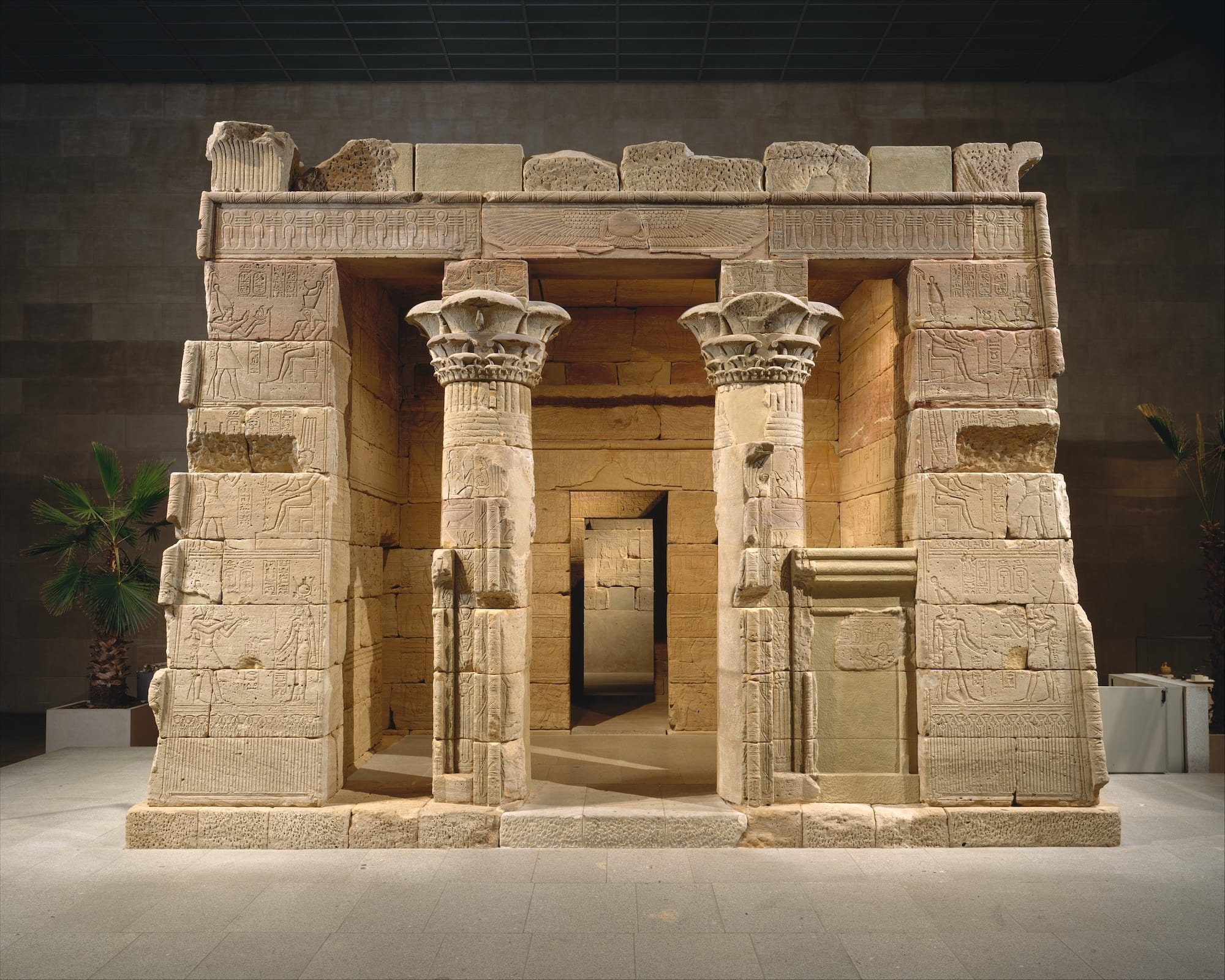
The Metropolitan Museum of Art has published interactive 3D scans of more than 140 objects from its collection, created in partnership with Japan's NHK broadcasting network. Viewers can rotate, zoom, and examine works spanning millennia: a third-century Roman marble sarcophagus, Kano Sansetsu's 1646 painting "Old Plum," a statue of Horus protecting King Nectanebo II (360-343 BCE), and a suit of armor belonging to King Henry II of France. The models support augmented reality on smartphones and VR headsets, letting users place ancient artifacts in their own space. The project grew out of NHK's initiative to produce ultra-high-definition 3D graphics of important artworks, with further educational programming planned. All scans are freely accessible through the Met's online collection, each object page featuring a "View in 3D" button.
The Metropolitan Museum of Art, founded in 1870 in New York City, houses over two million works spanning 5,000 years. Previous digitization efforts have made high-resolution 2D images freely available online, but this is the museum's most ambitious 3D scanning initiative to date.