Amsterdam officials say an overnight explosion at a Jewish school in the Buitenveldert district was a deliberate attack, not an accident. Mayor Femke Halsema said the blast damaged an outer wall but caused no injuries, and police are reviewing CCTV that reportedly shows someone placing explosives outside the building before fleeing. The incident landed a day after a suspected arson attack on a synagogue in Rotterdam, which had already pushed authorities to increase security at Jewish institutions across the Netherlands. Prime Minister Rob Jetten said there must be no place for antisemitism in the country. The immediate damage was limited, but the political meaning was not: a pair of attacks in quick succession has turned what might have looked like isolated vandalism into a broader security test for Dutch officials trying to reassure a visibly targeted community.
Buitenveldert is a southern Amsterdam district with a large Jewish community. Dutch authorities had already raised security after a separate suspected synagogue arson attack in Rotterdam the previous day.
Washington is moving elements of its THAAD missile-defense system out of South Korea and into the Middle East, a redeployment that South China Morning Post says Chinese analysts are reading in two ways at once. In the short term, they see a thinner US missile shield around the Korean peninsula and a possible capability gap that Beijing and Pyongyang will notice. In the longer term, the move also demonstrates that the United States can shift high-end air-defense assets quickly across theaters when a crisis demands it. South Korean media reports cited by SCMP say Patriot systems are also being sent to Saudi Arabia and the United Arab Emirates. President Lee Jae Myung said the move would not break South Korea's deterrence posture against North Korea, but he also called it a stark reminder that Seoul does not get the final word when US global priorities suddenly change.
THAAD is one of the US military's main systems for intercepting short- and medium-range ballistic missiles. Its 2017 deployment to South Korea angered both China and local South Korean critics, who saw it as a strategic escalation.
Apple is cutting the commission it charges developers in China, lowering the standard App Store take on paid apps and in-app purchases to 25% from 30%, while reducing subscription renewals and qualifying small-business rates to 12% from 15%. The timing is hard to miss. The changes take effect on World Consumer Rights Day, just before state broadcaster CCTV's annual expose program that often names companies accused of unfair practices and can trigger regulatory pressure. Tencent and NetEase publicly welcomed the move, with NetEase calling it constructive for the broader app ecosystem. Apple has trimmed fees in other markets under legal and political pressure, but the China decision matters for a different reason: it shows the company adapting before a consumer-rights spectacle and before regulators have to force the issue. In China, that kind of preemptive concession is often the real story.
Apple's App Store commission has been a global target of lawsuits, developer complaints, and antitrust scrutiny. China's annual March 15 consumer-rights broadcast is especially feared by major companies because public criticism there often precedes official penalties.
Nation Media Group, whose newspapers, broadcasters, and digital outlets are a daily news source across Kenya, Tanzania, Uganda, and Rwanda, is heading into a politically sensitive ownership change. Tanzanian tycoon Rostam Aziz says his company has bought a controlling 54% stake, a deal that still needs regulatory approval around the region. On paper this is a corporate transaction; in practice it is a press-freedom stress test. Nation titles such as Kenya's Daily Nation, Tanzania's Mwananchi, and Uganda's Daily Monitor have often stood out as relatively trusted outlets in environments where governments pressure journalists. Aziz is a former lawmaker from Tanzania's long-ruling CCM party and maintains close ties with regional elites, which is why critics worry editorial independence could erode even without crude censorship. The question now is less whether the papers will survive than whether they can stay recognizably themselves under a politically connected owner.
Nation Media Group is one of East Africa's most influential private media companies. Its outlets have long mattered because several governments in the region have tightened pressure on independent journalists and broadcasters.
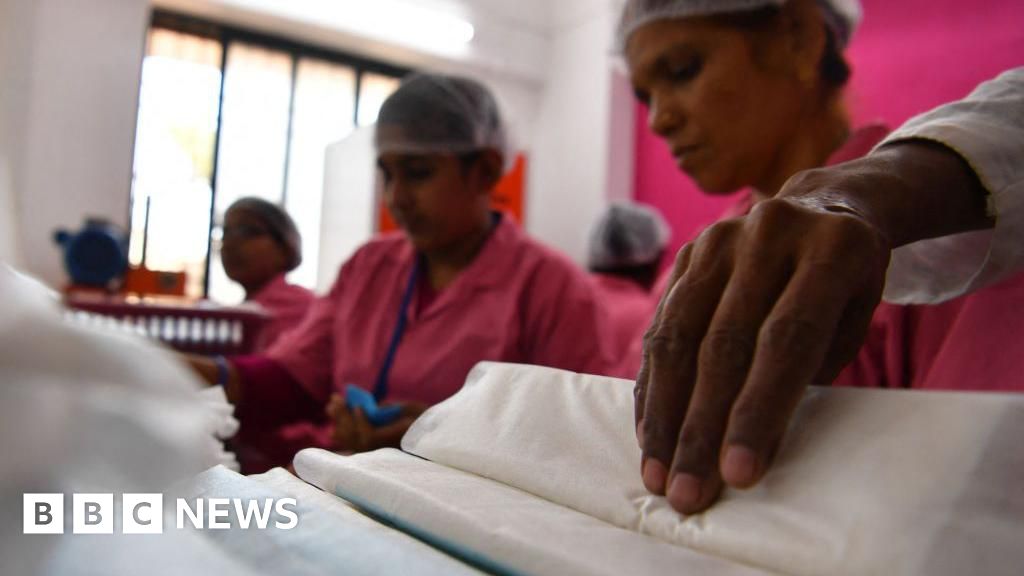
India's Supreme Court has rejected a petition seeking a nationwide menstrual leave policy, with a two-judge bench led by Chief Justice Surya Kant arguing that mandatory leave could backfire by making women seem less employable. The judges said such a rule might encourage employers to view women as "not at par" with men and would end up hurting career growth instead of helping. The case came from a lawyer who wanted two to three days of protected leave for women dealing with painful periods. The court's answer leaves the issue where it already mostly sits in India: some states and a number of large private employers offer menstrual leave, but there will be no national mandate from the judiciary. The decision matters because it captures a familiar policy split in India between accommodation and equality, with the court choosing the risk of formal workplace stigma over the case for guaranteed relief.
Menstrual leave has been debated in India for years. Supporters frame it as a basic workplace accommodation, while opponents argue that any legally special leave category can deepen employer bias against women in hiring and promotion.
Adobe will pay a $75 million penalty to settle the US Justice Department's lawsuit over how it sold and canceled Creative Cloud subscriptions. The core accusation was not that subscription software is inherently abusive, but that Adobe buried a harsh cancellation penalty in fine print and then made leaving the service unnecessarily painful. According to Ars Technica's summary of the case, customers on annual plans could be charged 50% of the remaining term when they canceled, while the company also used phone trees and other friction to keep people from getting out cleanly. The DOJ said that violated the Restore Online Shoppers' Confidence Act, a 2010 law aimed at deceptive online charges. For Adobe, the settlement is financially manageable. For the rest of the software industry, it is a warning that dark-pattern subscription design is no longer being treated as merely annoying product behavior.
Adobe helped normalize software subscriptions in creative tools more than a decade ago. The broader political fight now is over whether companies are disclosing recurring charges clearly and making cancellation as easy as signup.
Iowa's House has advanced a package of bills that would push the state's public universities further into the Republican project of remaking higher education from above. One measure would require introductory American history and government courses and route much of that work through civics centers meant to promote debate on issues "important to the American republic." Another targets DEI work more directly, part of a broader state effort to strip out offices, trainings, and programs that conservatives see as ideological capture. Higher Ed Dive notes that the bills could collide with each other in awkward ways: if newly required civics coursework discusses race, gender, or critical race theory in the wrong way, it could itself become vulnerable under anti-DEI restrictions. The legislation is part of a coordinated Iowa campaign that has been building since Republican leaders created a dedicated higher-education committee in 2024.
Iowa has become one of the most aggressive states in using legislation to reshape universities, especially around DEI, general education, and faculty control over curriculum. The Republican-controlled Senate and governor could still push these bills into law.
A new study says climate change is now lengthening the average day by about 1.33 milliseconds per century because rising seas are redistributing enough mass around the planet to alter Earth's rotation. That number is tiny in daily life and huge in geophysics. The important point is not that tomorrow's day will feel longer, but that warming has become strong enough to leave a measurable fingerprint on one of the planet's most basic physical rhythms. Scientific American reports that the effect is unusually large by long historical standards and could become more influential than the moon's tidal braking by the end of this century. The mechanism is conceptually simple: melt land ice, move more water into the oceans, spread that mass farther from the planet's axis, and Earth spins a little more slowly. It is a striking example of climate change showing up not only in weather, coastlines, and ecosystems, but in planetary mechanics.
Earth's day length naturally varies a little because of tides, atmospheric shifts, and processes inside the planet. What is new here is the size of the climate-driven signal and the fact that it can now compete with older natural drivers.
MIT researchers say two common mutations behind Rett syndrome damage the developing brain in part by making its blood vessels structurally leaky, and they were able to trace that effect to overexpression of a specific molecule, miRNA-126-3p. The team used advanced human tissue cultures to model how the mutations disrupt vessel development, then showed that dialing down that microRNA helped rescue the defect. Rett syndrome is usually discussed as a severe neurodevelopmental disorder caused by mutations in the MECP2 gene, with symptoms often appearing in early childhood, especially in girls. What makes this result interesting is that it adds a vascular mechanism to a disease usually framed mainly through neurons. That does not mean a treatment is around the corner, but it does narrow the search. When a complex disorder can be tied to a more specific downstream pathway, researchers have a much better shot at designing interventions that are testable rather than purely speculative.
Rett syndrome is a rare developmental disorder linked mainly to MECP2 mutations. Children often appear to develop normally at first and then lose motor and communication abilities as symptoms emerge around ages two to three.
A new paper highlighted by Ars Technica finds that the self-play methods behind systems such as AlphaGo and AlphaZero stumble on a surprisingly basic family of games built around mathematical parity, including the matchstick game Nim. That is interesting precisely because the games are simple enough to teach children. In chess or Go, reinforcement learning can associate board states with winning chances and gradually improve through self-play. In Nim-like impartial games, winning depends on grasping a hidden parity function, and the same training approach appears not to discover it reliably. The result does not mean modern game-playing AI is suddenly brittle everywhere. It does mean there are structured reasoning tasks where scaling familiar self-play recipes is not enough. For people who want to use similar methods beyond games, that matters: a model can dominate rich, complex environments and still miss a small rule system if the wrong mathematical abstraction never clicks.
Nim is a classic two-player game where people remove objects from shared piles and the win condition depends on parity. Researchers use games like it to expose what an AI system has actually learned rather than just whether it can rack up wins.